
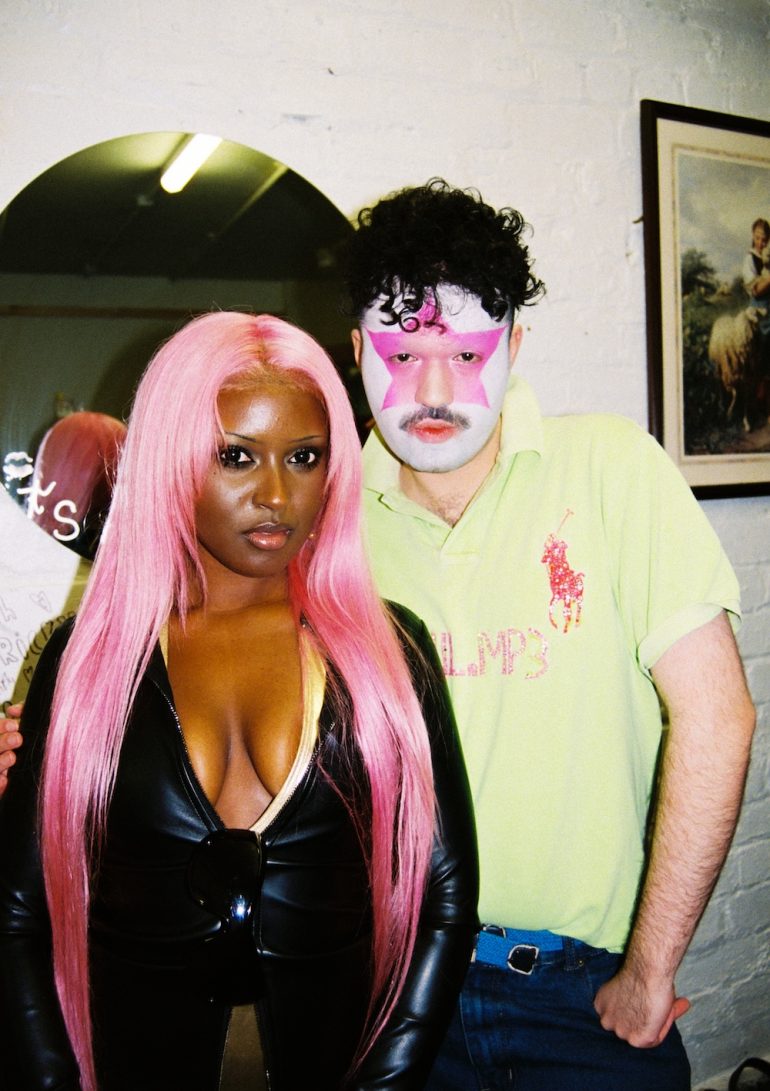
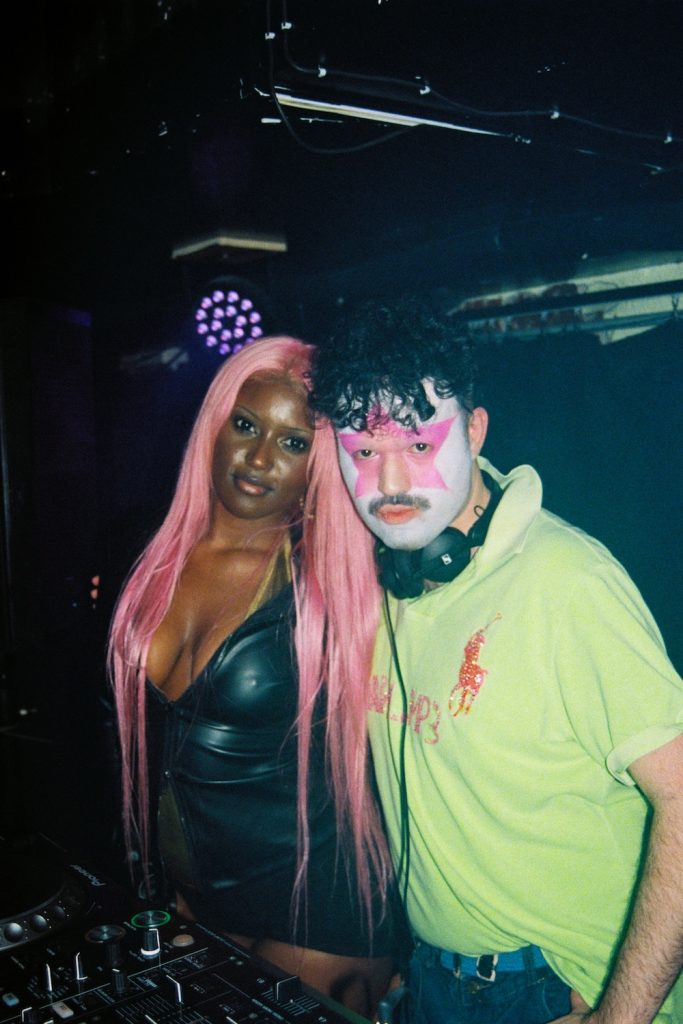
“I still feel as if I’m hungover,” Cherrie B grins over our Zoom call on the grey Monday evening. She’s just settled back in London from a weekend of partying in Glasgow for her Scandal.gla debut. Also on the call is Rahul.mp3, who is equally as dazed from the event, “My only thing about Scandal.gla is that it goes by so quickly, I felt like I blinked and we were already at 2am.”
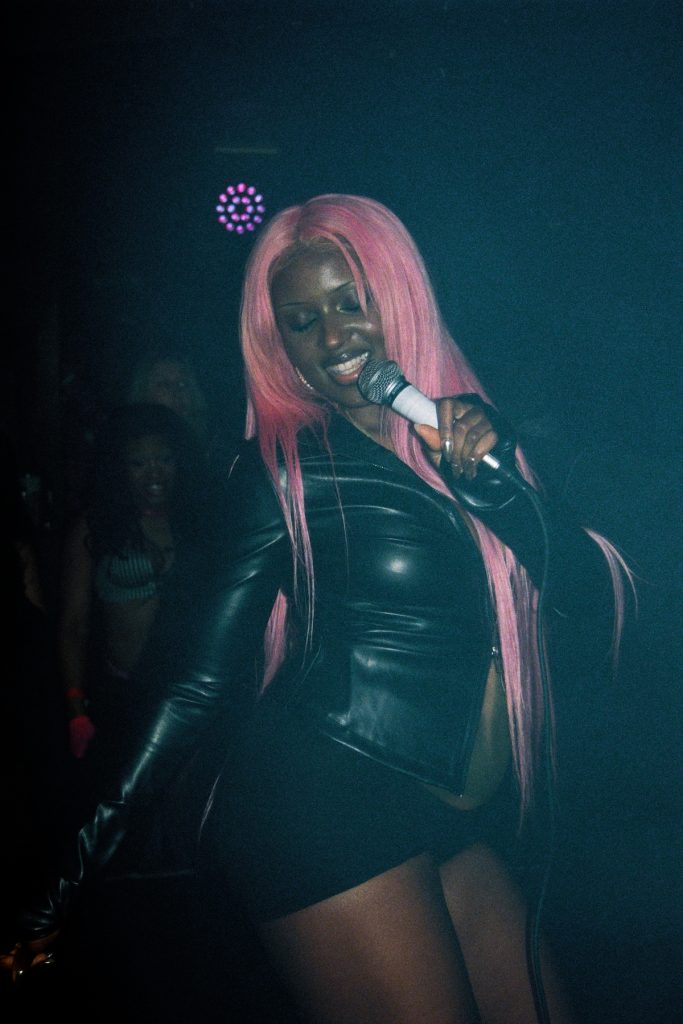
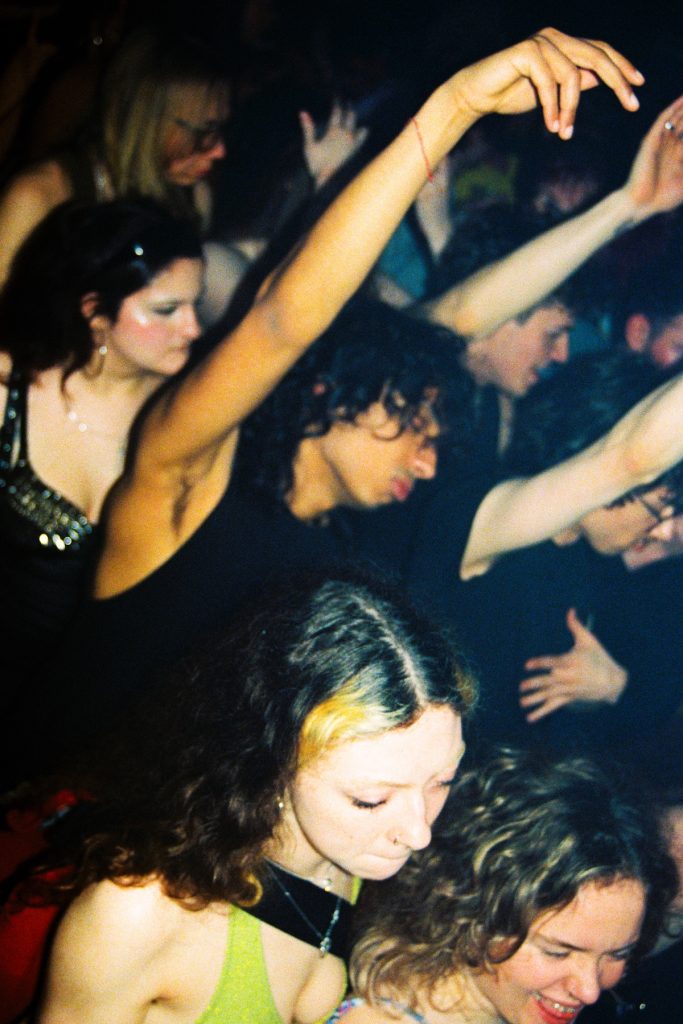
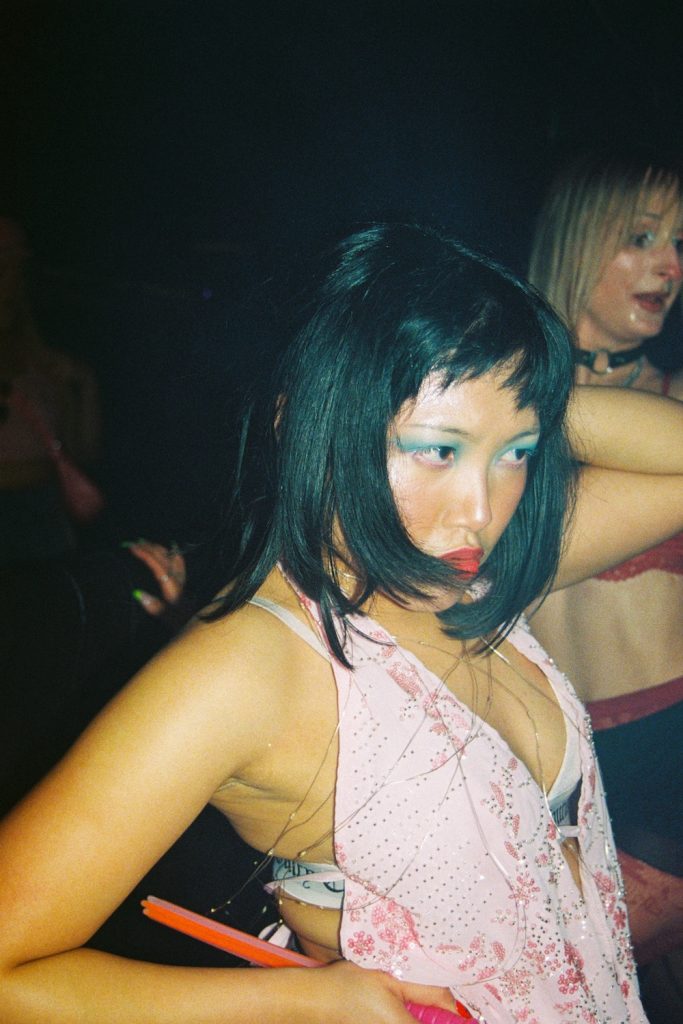
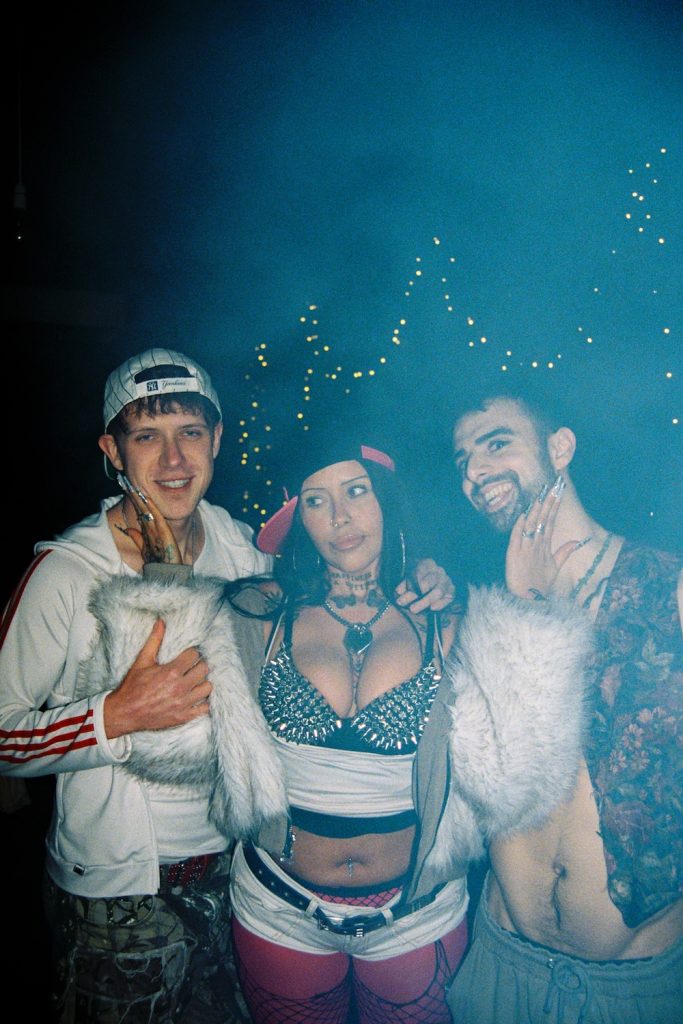
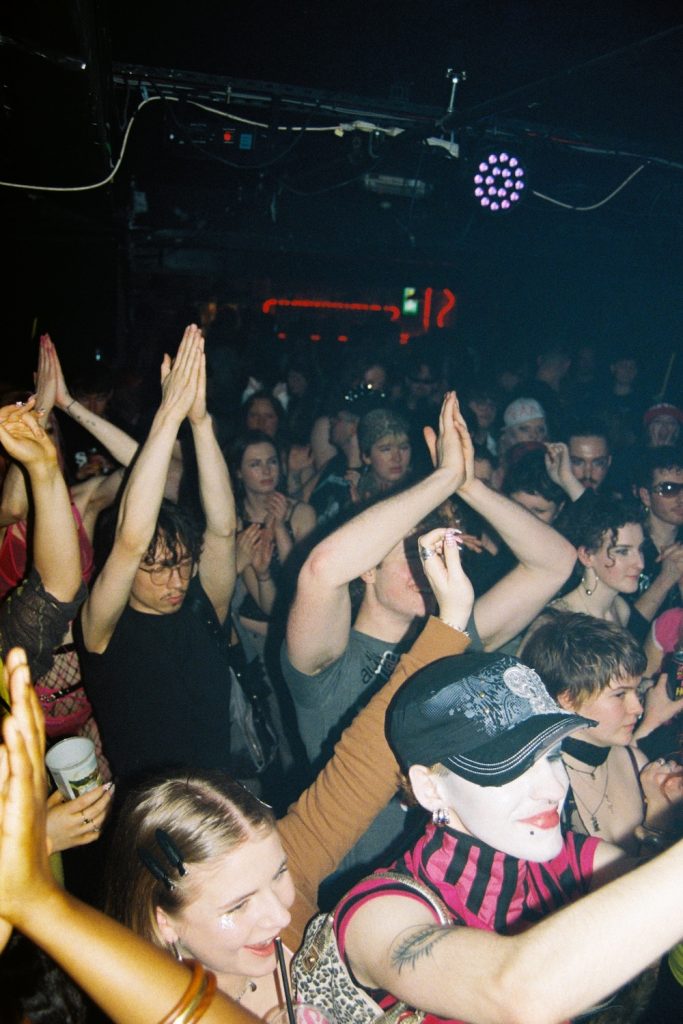
The catalyst is “Kiss Me,”: a sugar-rush induced club track that splices pop maximalism with indie sleaze, party culture particular to the mid-2000’s and early 2010’s. Rahul.mp3’s third single, and his first official link-up with Cherrie B, is a thumping, electronic track that sees this genre through a 2026 lens. Premiering “Kiss Me” at Rahul.mp3’s club night Scandal.gla, which prioritises QITPOC DJs and audiences, was a sweaty, sexy and dare I say scandalous affair that couldn’t have been more fitting to its sound.
Rahul.mp3 grew up in Glasgow’s West End in an Indian household where he found his vice in discovering pop culture online. A former stan account kid, the producer shares, “I would be obsessed with pop stars and what the industry was. I realised that there was a course catered to what I wanted to learn more about and that was music business. When I ran my stan account, I would be counting charts and ticket sales and it was almost as if we were our own like makeshift A&Rs for people that didn’t even know we existed.”
On the other side of the UK, Cherrie B’s upbringing across South London, shaped by her Jamaican heritage and Windrush lineage, was one where she immersed herself in the arts. “Maybe from when I was five years old, I’ve made it very obvious that I wanted to be a performer. I’ve grown up dancing, singing, acting and stuff, my parents put me into a lot of activities.”
Despite growing up on opposite ends of the UK, the two shared the same realities of growing up on the internet, where a secret third space was slowly forming. Rahul’s most-played song as a kid? Ke$ha’s “Your Love is my Drug,” which he did scroll all the way to the bottom of his YouTube likes to find. Meanwhile, Cherrie had G-Dragon’s “Breathe” and K-pop girl group f(x)’s “Four Walls” on repeat, “I literally didn’t even listen to that much English music growing up, which is kind of crazy.”
Their individual tastes and experiences helped shape this single into what it became, their mutual love for electronic, pop tracks, connected the two with their understanding of how online spaces shape taste, aesthetics and a real ambition to turn what they saw online into their on IRL experiences.
Post-Scandal.gla weekend, the high of the night settles and the lead up to the single release starts to take life outside of the club. I caught up with the pair over Zoom where we talk about the power of collaboration, the pair relearning their ways through the music industry and what it means to be Black and Brown creating predominately electronic music.
If “Kiss Me” proves anything, it shows that the kids who ran stan accounts on the internet are now building rooms for themselves and we get the pleasure of being invited in.
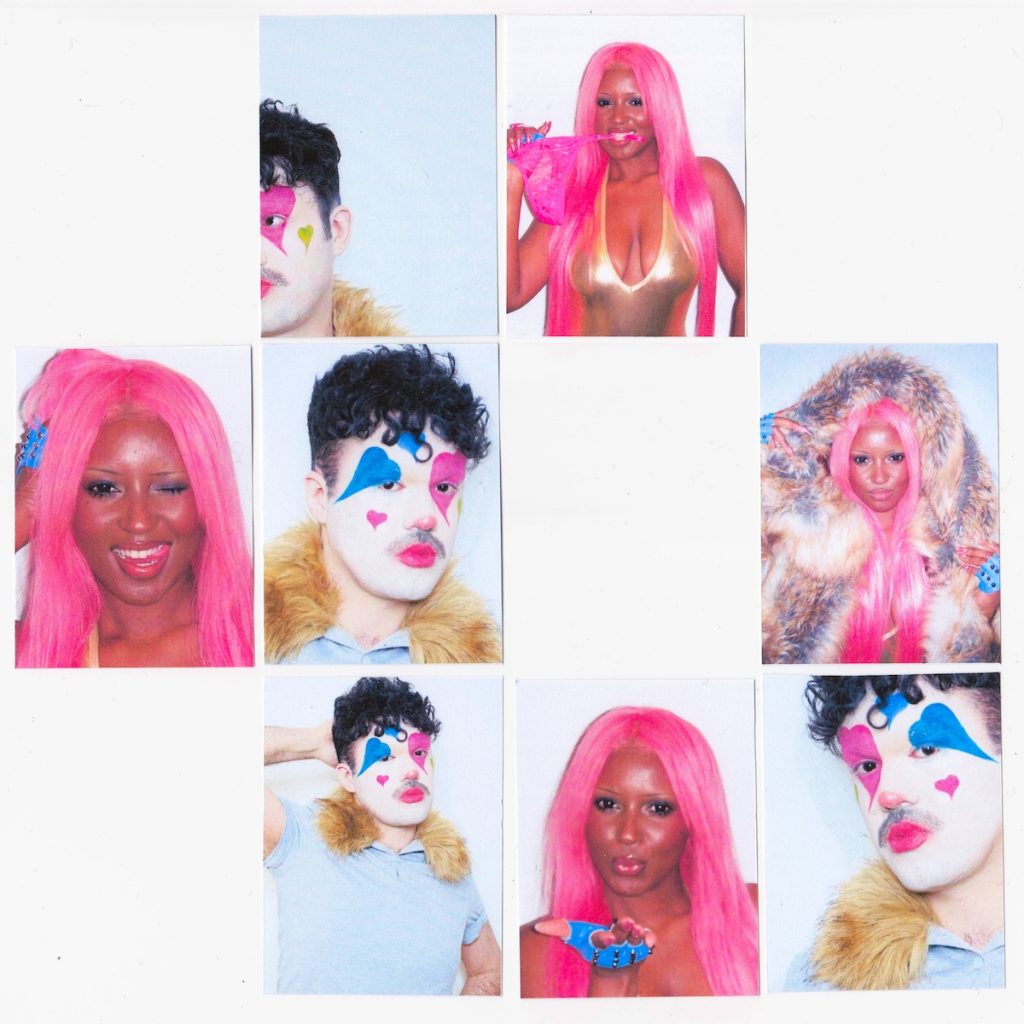
How did you guys first become aware of one another?
Rahul.mp3: I knew of Cherrie’s music [prior] on streaming services. I saw that a mutual of mine [worked on] Cherrie’s music video for “Big Bo$$” and so I messaged them and I was like, “How the hell do I get Cherrie for Scandal?”
Cherrie B: I’d seen [Rahul’s] releases on Spotify in the hyper-pop playlists and so I was already kind of familiar with him. Rahul had reached out to me after I had posted that music video. It seems like we had seen each other from a distance, but then, you know, there’s something that really propelled our relations to each other.
Do you remember your first messages to one another?
Rahul.mp3: It was literally, “Do you have a booking agent?” I wanted to book [Cherrie] straight away.
No messing about, straight to the point.
Rahul.mp3: Cherrie is such a pop star, I didn’t know if [she]was independent or not so I was wondering if she had a team. You need to kind of go through all these processes to get a hold of an artist, but it worked out very easily.
Cherrie B: Yeah, [Rahul] came super professional which I really appreciate. But yeah, it’s just me. What an opportunity!
How did the single come about? How did you manage to work on this as a collaboration together?
Rahul.mp3: I wanted to release a song around [Scandal.gla] and I had this idea. I was really falling in love with EDM at the time and I [had been thinking] I’m gonna have Cherrie B come to Scandal, what if I chanced it and I asked her to be on the song?
Cherrie B: Yeah and what Rahul sent me was literally perfect from the very beginning. He just sent that one beat over and I was able to hop on it and we got it, we did it!
How do both of you approach songwriting in particular? Is it the lyrics or the beat that comes first? Or is it the visuals you have in mind prior?
Rahul.mp3: I always have an artist in mind when making the songs, and [for ‘Kiss Me’] I had Cherrie in mind. I’ll come up with the melody and I’ll set out the chords first, then I’ll decide if I want to make it a techno, EDM or a Jersey club song, I always do the drums last.
Cherrie B: I’m primarily a singer-songwriter. There’s a lot of hearing beats and having ideas, then developing on that afterwards. In this case the original song idea, which is very close to what you hear in the final, was just super fun. It sounded pink and so it makes sense that Rahul says that he had made that with me in mind for this.
Do you remember the first line you wrote for this Cherrie?
Cherrie B: It was the phrase “round and round.” There’s just something about the way that the instrumental sounds, it sounded like [it was in] motion and it was fun. I was deciding whether to talk about my waistline going round and round but it ended up being about bottles going round and round like a spin the bottle type of situation.
That’s so sick! What do you think is the most important thing when it comes to collaborations?
Cherrie B: Having a true alignment [with the other collaborator] because it needs to be genuine. Rahul and I hadn’t met in person but I can see the whole vibe, you know? I love when people show themselves to the world. I’m able to get you and I know that’s vice versa as well.
You also need to both bring something kind of different to the table to make it a true collaboration. That’s what I believe makes it work and it gives a bit of longevity that way as well.
Rahul.mp3: [Collaboration] works the best for me when I see eye to eye with the person. You need to kind of get along with them and I just felt like the moment me and Cherrie just started chatting it was as if we knew each other already.
This is also within collaboration with [Scandal.gla] as well, when I have a headliner come, some can be a bit in and out. [But with Cherrie] it was a really special one because we got to hang out, chat, eat and get to know each other a lot more. I think there’s a lot of personal ways that can make a collaboration just that extra bit special and more compatible. I think getting to know the person is a really important one to me.
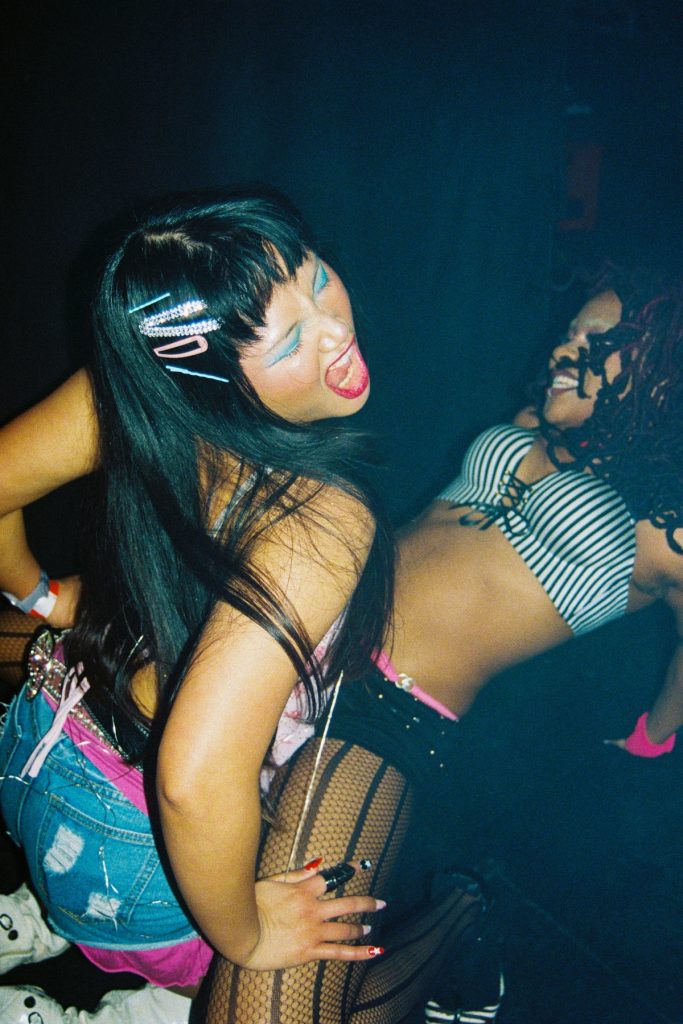
I’ve listened to “Kiss Me” so many times, it reminds me of mid 2000’s/early 2010’s indie sleaze, party scene culture. That era was heavily defined by its Black, Asian and artists of the diaspora. What does indie sleaze mean to both of you?
Cherrie B: Black and Brown people’s contributions in indie-sleaze and even EDM genres are so [prevalent], we stay doing all of these different genres. Especially within electronic music, but it’s just not often recognised as being electronic music. A lot of Azealia Banks’ early work was definitely in this realm for example, but she was rapping so that, of course, is how they called it first.
Growing up that’s always been an inspiration for me, Dev Hynes used to be in the scene, there’s so many people. I mean they’re not really in the genre, but I was even gonna say Travie McCoy from Gym Class Heroes. I feel like [Black artists] were honestly everywhere.
When it comes to people of colour and actually contributing to that sound and the way the scene looks, a lot of it is about freedom of expression. Indie scenes, electronic music, pop, all of it is about freedom of expression and having a good time. Partying is often considered like white, quote unquote. But yeah, that is definitely what it represents, it’s like a specific type of being alternative.
Rahul.mp3: I look back to the people that I listened to the most in EDM and that kind of genre and I didn’t realise a lot of my favourite ones are Black and Brown artists. There’s Shygirl, Reysha Rami; Namasenda is an absolutely amazing one.
There’s a lot of artists that make really beautiful music and I’m glad that these people get a platform, but there’s a lot of cultures that have white mediocrity and sometimes the Black and Brown artists have to work 10 times harder to get it there.
You debuted “Kiss Me” at Scandal.gla, a queer clubbing experience that prioritises QTIPOC individuals. Rahul, why was it important for you to start this night?
Rahul.mp3: The first ever Scandal was almost like a pilot, I didn’t really know what I was doing just yet. But once I started making the lineup for the second I realised I want to build this infrastructure that not a lot of QTIPOC artists have.
I wanted to have a club night that had residents and people that were supported and celebrated for bringing their cultures and music that you wouldn’t usually hear in queer clubbing. I really set out to almost have this support system but also a celebration of different cultures that aren’t that sought after in the Glasgow clubbing scene in general and I think that’s what made it so unique and authentic.
We did the Armana Khan night where it was all South Asian music. I’m sure there were people in that crowd that had never heard a South Asian song before in their life, but then the whole night was dedicated to that. I was really determined to do that and I was inspired by the likes of Mojxmma who basically set the tone for what we should be doing for club nights and prioritising groups of people that aren’t usually prioritised in the music industry.
What do you think mainstream club culture needs to survive?
Rahul.mp3: I definitely think showing up, it’s as simple as that. I definitely think even if it’s a night where you don’t know what’s going on, give it a shot and show up. Be more interactive within the community that you want to be a part of.
Cherrie B: I think organisers need to continue or do more nights that are catered to niche groups that reflect what we see online. We’re used to having the internet as a third space, and that is lovely, but, to take club culture further it would be to definitely reflect those niche spaces in the real world so people feel inclined to come out and create friendships.
What was one thing you had to learn very quickly when working in this industry?
Cherrie B: Sometimes you may post or release something and people might not care. It’s kind of to do with people being in their own worlds, but, with that said, you can make people care by giving more in different ways. It doesn’t need to be running yourself to the ground, you can connect with anybody who’s showing you support. You can do things for them, in a way where you’re kind of in service to them and with that, there’ll always be reciprocity. It’s about being genuinely like a nice person and just listening to the support that’s currently coming your way.
Rahul.mp3: Not to take things personally. There are some things that you can take to heart and be really passionate about, but there are some things that are just not to do with you. Someone can say something to you, but you really do need to rise above a lot of situations, which isn’t always the best thing. I do think that we should have more support.
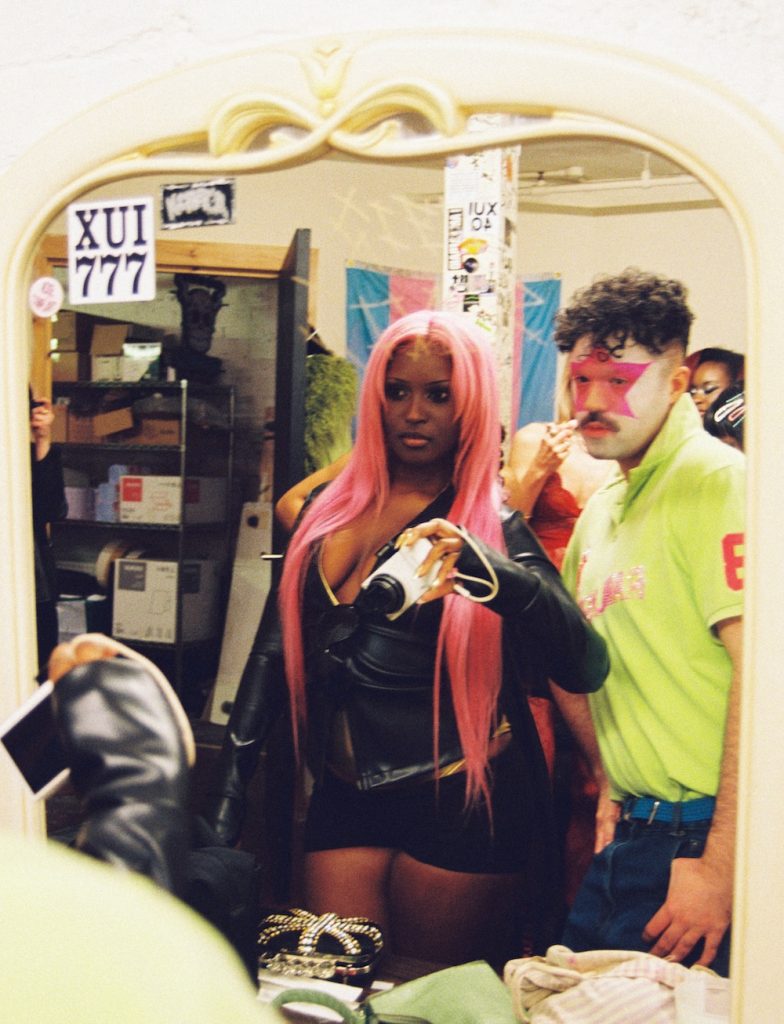
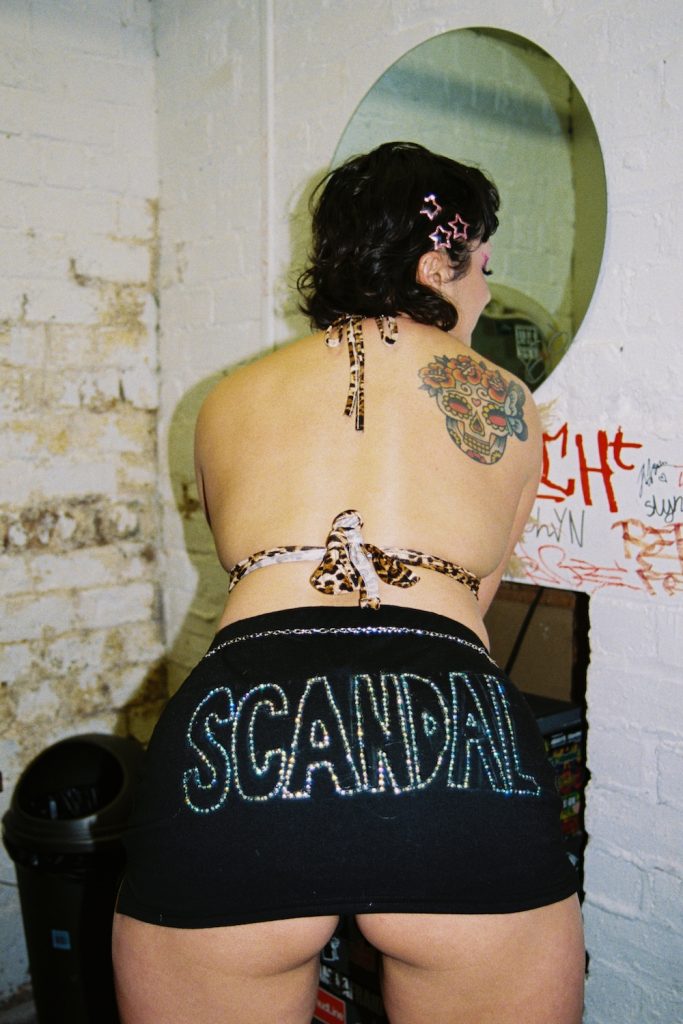
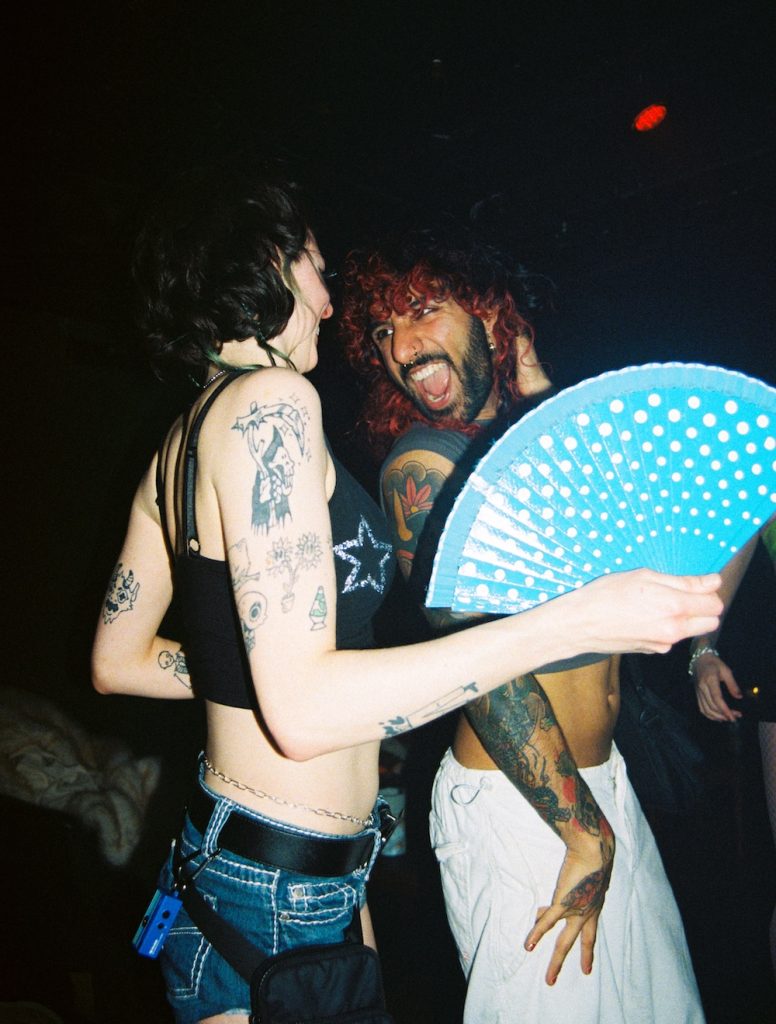
What was the last piece of media that inspired you, whether it’s a song, a book, an article subset, a film or a text from a friend?
Rahul.mp3: Cece Natalie,, I somewhat recently discovered her. When I was listening to her most recent projects. It just transported me into a world of this McBling style world where I felt like I was in LA. It just felt like such glamorous music and I felt the same way about Cherrie when I first discovered her, it really inspires me.
Cherrie B: As we’re having this interview right now, the past seven days on Twitter, there’s been a resurgence, or not even resurgence – a newfound love for Nicola from Girls Aloud and her solo career.
People are digging and looking at Girls Aloud music videos, their music video for “Biology” has recently inspired me. I remember this song growing up and it being on television, but the way it looks and the whole aesthetic of the music video, it’s so Pinterest worthy.
People are saying that Pinkpantheress has definitely studied them and that music video, which I see. It’s the pink and then they’re wearing a bit of smart office attire. It’s just so of the era. I love older pieces of media that tie into today, you know.
What are you most excited about for 2026?
Cherrie B: Collaborations!
Rahul.mp3: Yes! Meeting new people, releasing new music, creating new music and performing more. [My] EP is coming out at the end of this year, no date yet but Q4.
Cherrie B: I’m also excited to see how much I can do in the most fun way possible. I’m realising like, going back to lessons that we’ve learned early in our music careers, what Rahul said about not taking things seriously, I’m just excited to see how much I can do, almost like a game because it’s never that serious.
Follow Cherrie B On Instagram
Follow Rahul.mp3 On Instagram
Words: Nicole Ndlovu