
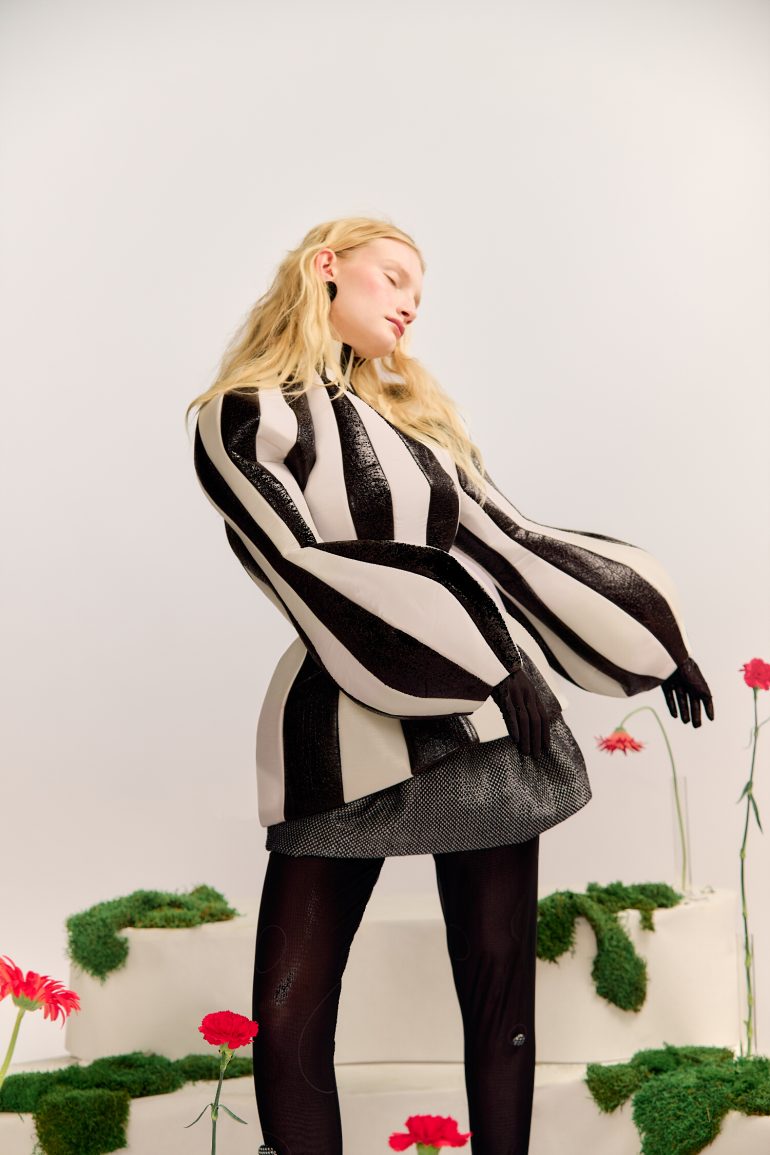
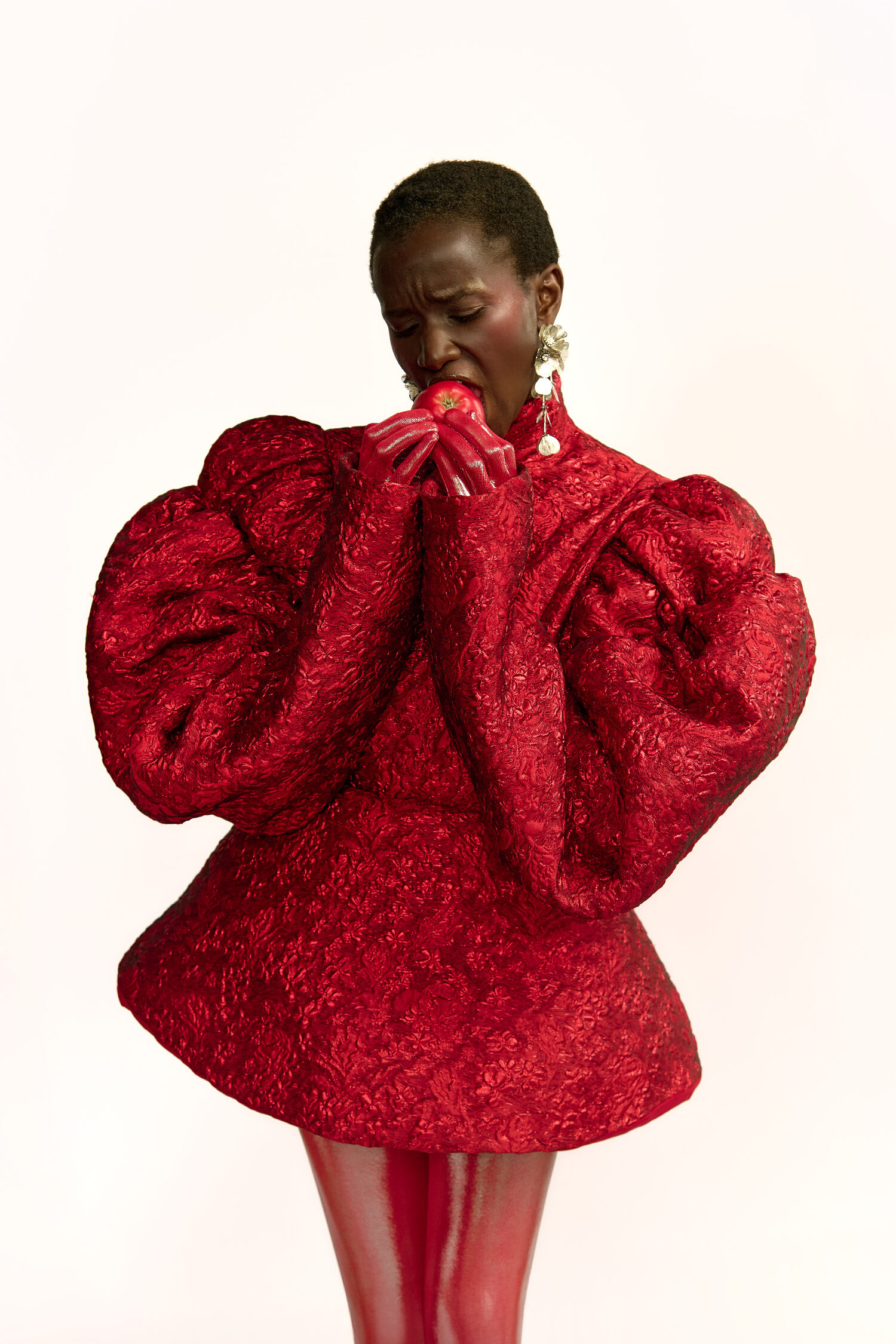
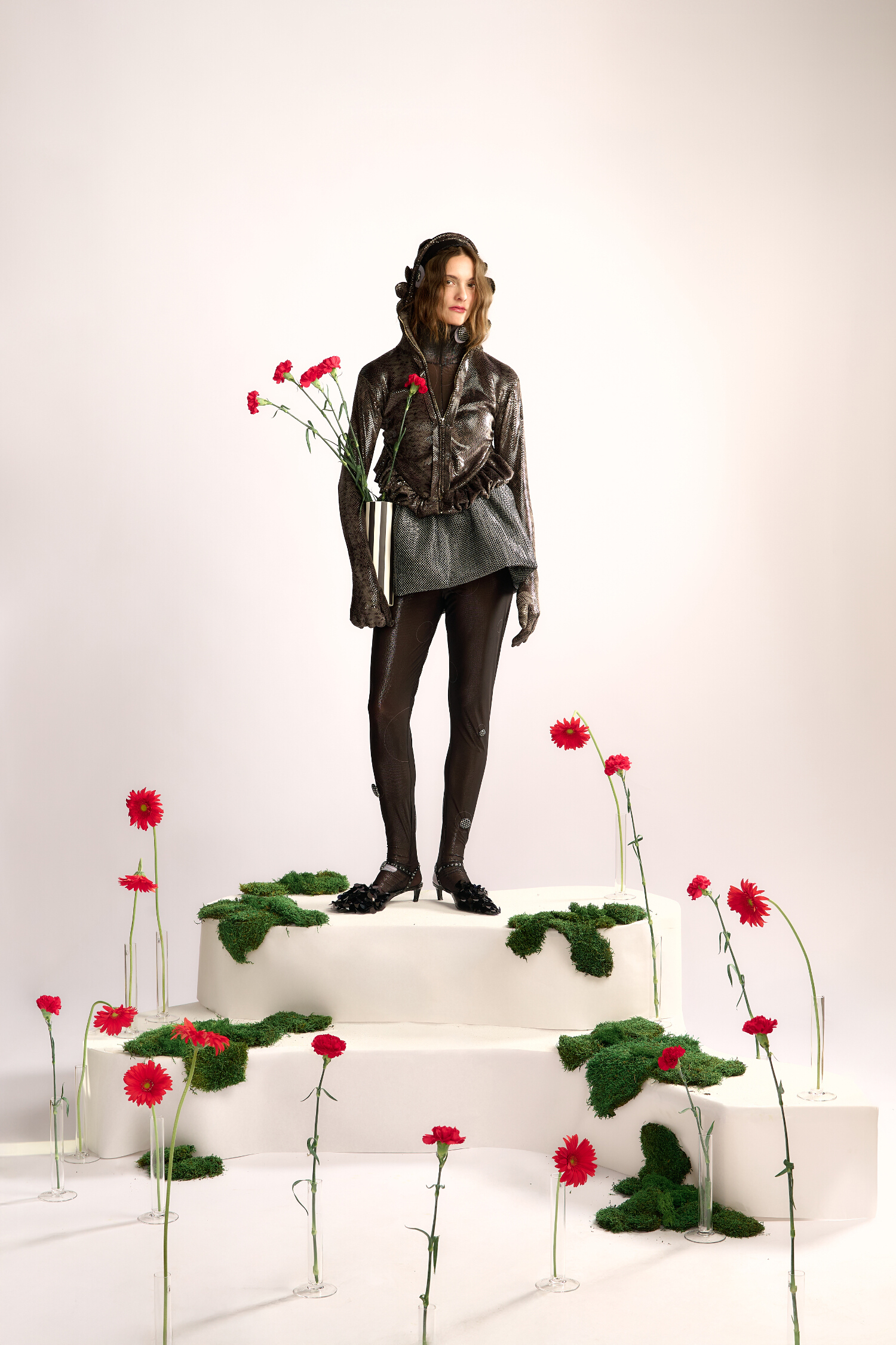
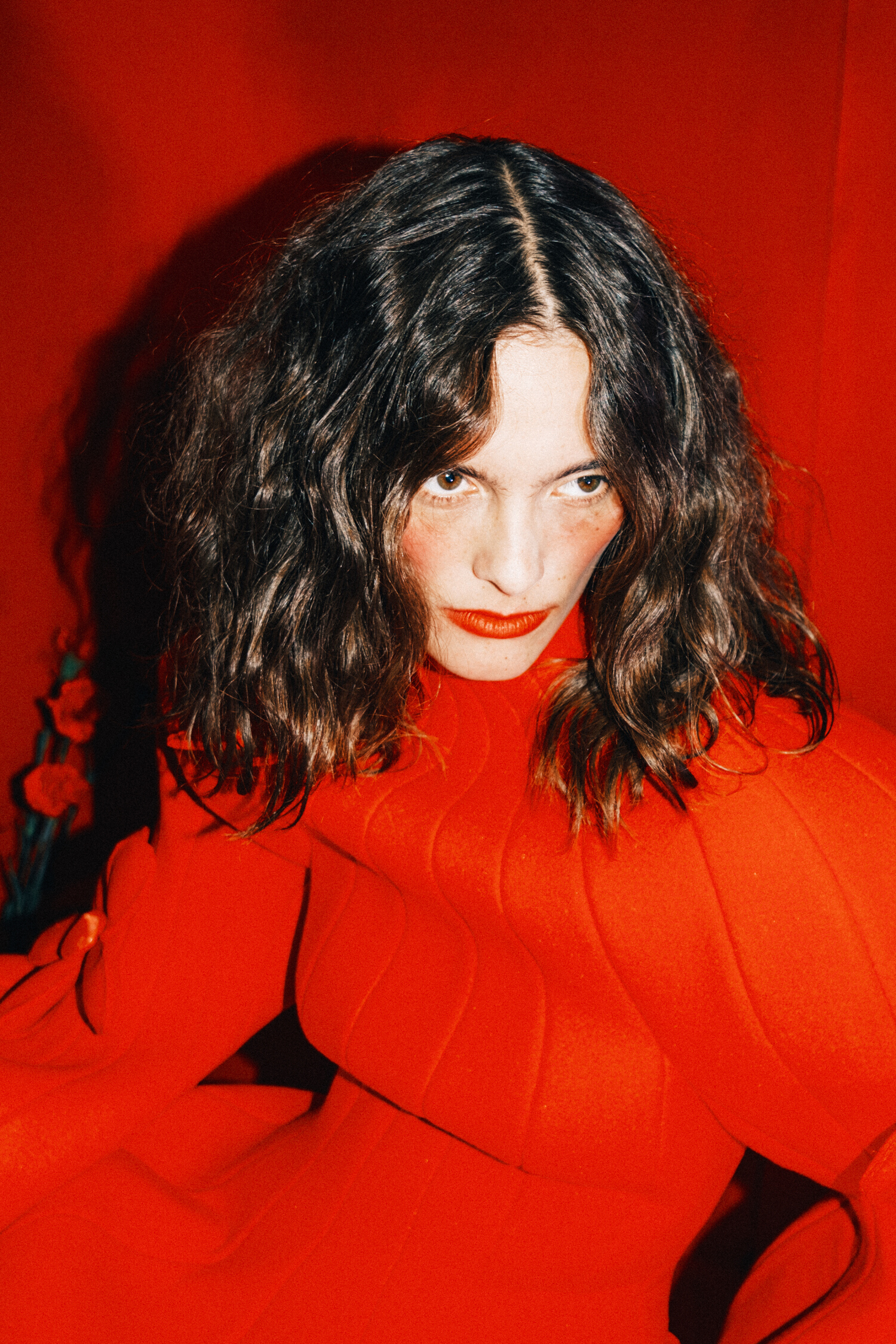
Jennifer Milleder is one of those rare designers that has managed to master the art of translating feelings into fashion. In her latest collection entitled In Bloom, she leans into the emotions that are naturally a part of every transition. Alongside bold color choices showing a visual progression from innocence to empowerment, Milleder makes flowers a central symbol that seeps out through shape, silhouette and structure. Sculptural volume and 3D elements allow the floral theme to emerge organically from the garments thanks to skillful draping.
Milleder honed her technical skills at the University of Applied Arts in Vienna, graduating in 2021. Already a standout talent, her graduate collection won the Arts Thread Global Design Graduate Show in the Textiles – Print / Embroidery category. Since then Milleder’s eye-catching designs have been featured in various international editions of Vogue and L’Officiel, and worn by the likes of Black Peppa, Linnea Berthelsen, and Conchita Wurst. She currently divides her time between London and Vienna.
Noctis caught up with Milleder recently to chat about the role femininity plays in her design process, the intersection of fiction and reality, and why she believes the best way forward for female fashion is to break down the already established conventional notions.
Photography: Jakob Kotzmuth
Your latest collection draws inspiration from the Brothers Grimm’s Little Red Riding Hood. What was it about this story that inspired you?
For me, Little Red Riding Hood was never just a fairy tale—it’s a story about transition. That moment of stepping out of childhood into something unknown, where curiosity, fear, and autonomy begin to coexist.
In IN BLOOM, I was interested in these emotional states rather than the narrative itself. The figure of Red Riding Hood and the Wolf become archetypes—representing vulnerability, instinct, danger, and strength. I translated these tensions into silhouettes, materials, and contrasts, rather than illustrating the story literally—though hints of the iconic Red Riding Hood look can certainly be glimpsed throughout.
Are there any other inspirations and influences behind this collection?
The collection draws from very personal memories and emotional states. I’m interested in how stories shape our understanding of identity—especially femininity.
At the same time, there’s a strong influence of tailoring and sculptural thinking. I work a lot with volume, construction, and material to transform these abstract ideas into something physical. So it’s always a dialogue between narrative and form, between something very internal and something visibly present.
Speaking about the collection, you stated that you intended to explore femininity by employing masculine shapes. What was the thought process behind that decision?
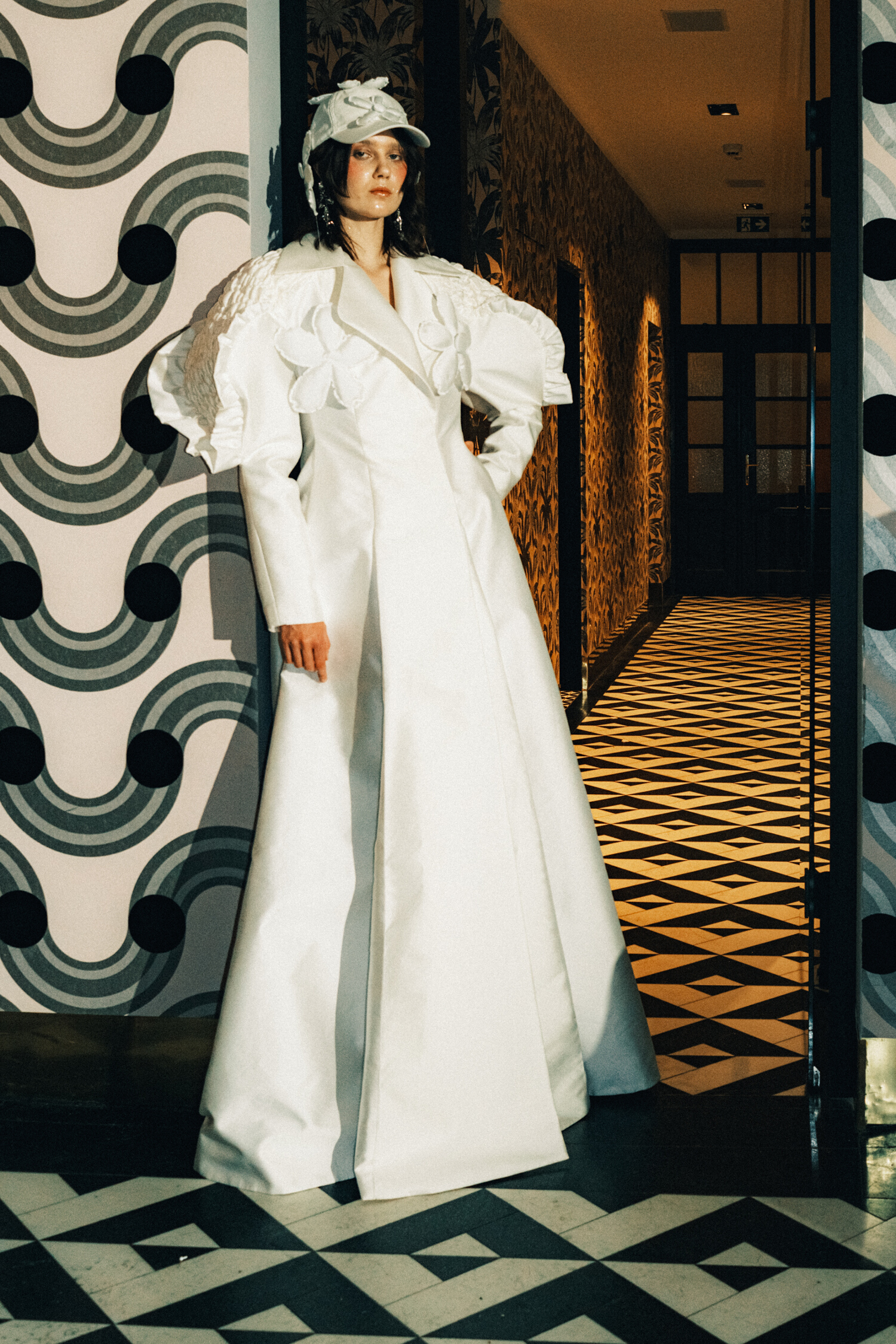
For me, femininity is about complexity. By incorporating masculine shapes into feminine silhouettes, I aim to create a contrast that challenges conventional expectations. Strong shoulders, precise cuts, and structured lines form a framework for a different kind of femininity—not fragility, but a celebration of gender complexity and diversity—one that feels self-assured, protective, and intentional.
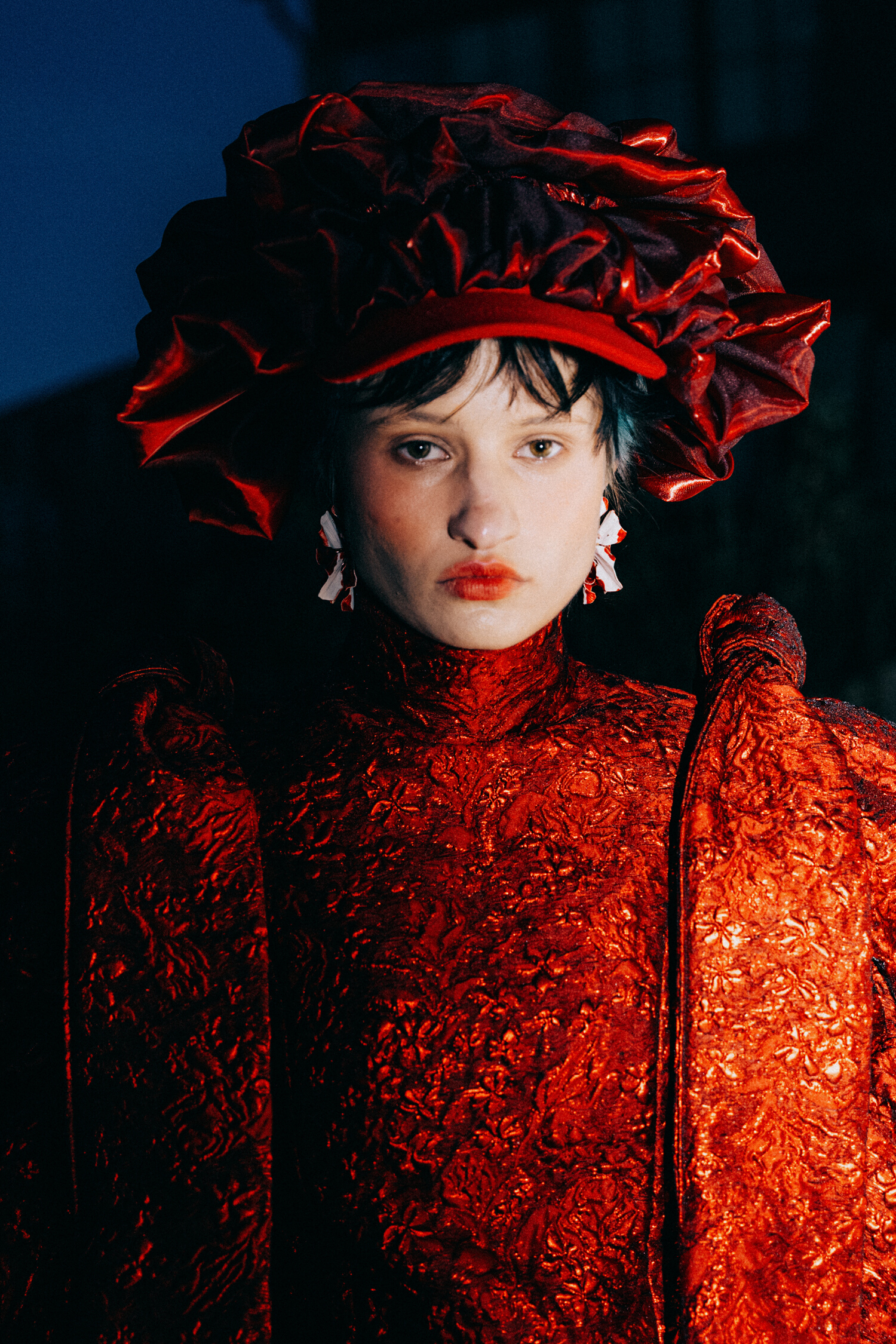
Photography: Linda Tomschiczek
Can you talk us through what the design process was like for creating this collection?
The process usually starts with research and building a narrative. I collect references—visuals, textures, fragments of text—and slowly translate them into sketches. From there, it becomes very hands-on: draping, experimenting with proportions. It’s a very intuitive process, but always connected to the initial concept.
Which part of the design process would you say is the hardest and which would you say is the most fulfilling?
The most challenging part is the most fun part at the same time: translating something very emotional and abstract into a precise physical form. It’s about finding the exact balance—how much volume, how much structure, how much softness a piece needs to carry the idea without losing clarity.
The most fulfilling moment is when that translation works—when a garment suddenly holds the narrative, and you can feel both the concept and the emotion in it without needing explanation.
Do you take customer preferences and the state of the fashion industry in general into consideration when you’re creating?
I’m aware of the industry, but I don’t start from there. For me, the concept always comes first. Fashion, in my practice, is a narrative and artistic medium, not just a reaction to trends or demand. That said, I’m very interested in how the pieces exist once they leave the studio—how they are worn, interpreted, and lived in. So it’s less about adapting to preferences and more about creating something that invites a strong personal connection.
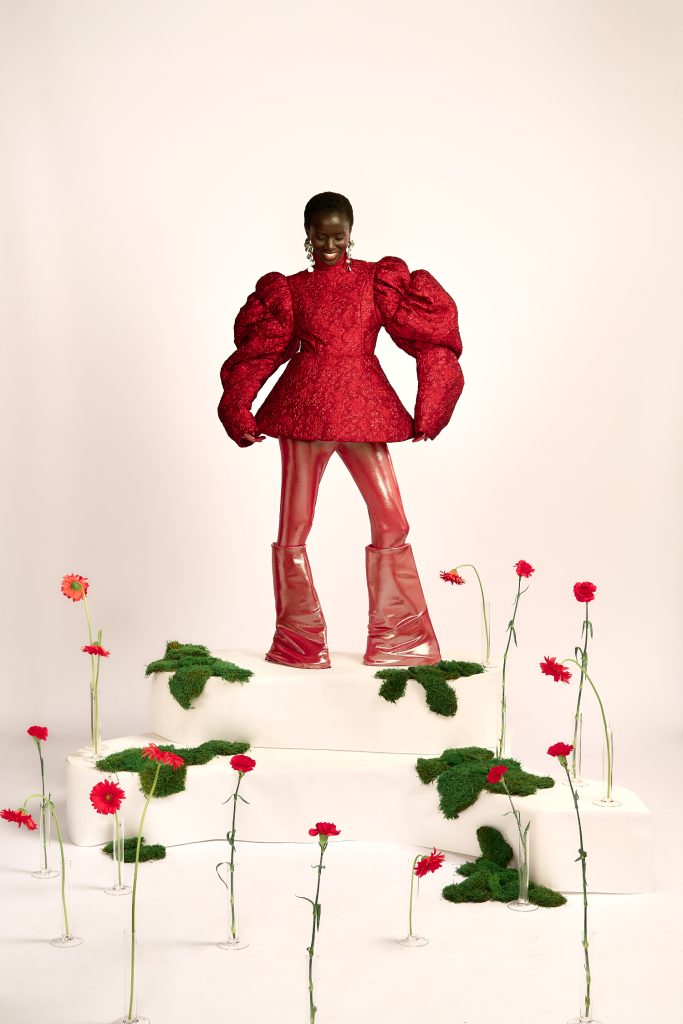
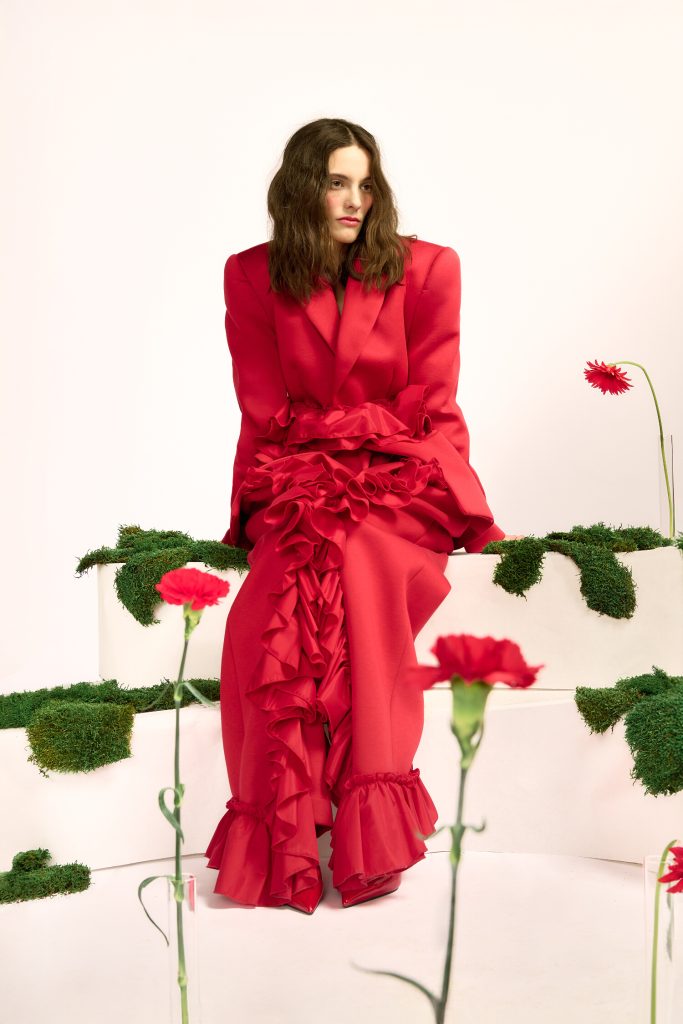
Photography: Jakob Kotzmuth
How do you feel your work stands out within the ever-growing fashion industry? What do you want the Jennifer Milleder brand to be known and instantly recognisable for?
I hope the work stands out through its narrative depth and its contrasts. I want the brand to be recognizable for its balance between softness and structure, vulnerability and strength. Ideally, when someone sees a piece, they feel that there’s a story behind it.
IN BLOOM is the first chapter of a full story you’re telling with your designs, with THE GARDEN coming next. Can you give us a sneak peak into what THE GARDEN entails?
THE GARDEN is deeply rooted in my childhood on a farm in the Austrian countryside, where material awareness, handcraft, and inherited traditions shaped my understanding of making.
The collection works with found and familiar materials—loden, felt, fragments of my grandmother’s textiles, floral elements, even everyday objects—which are transformed into sculptural garments. Memory becomes something tangible here.
Conceptually, THE GARDEN is about growth, but also about tension: between past and present, rural and urban, control and excess. Silhouettes become more expansive, more spatial—almost negotiating the space around the body. It’s less about innocence and more about complexity, where identity is shaped through layers of memory, material, and transformation.
This may be a tough one, but can you name one celebrity – just one – that you’d love to dress? And what piece would you dress them in? (Give us two names if it’s too difficult to choose only one!)
That’s a difficult one. I would love to dress Anya Taylor-Joy. She has a very distinctive presence — there’s a mix of strength and fragility that fits well with the collection.
Also I would love to see Sadie Sink wearing the pieces. She brings a certain emotional depth that aligns with the narrative aspect of my work.
I would choose one of the more sculptural looks, something with strong shoulders and volume that creates a clear silhouette.
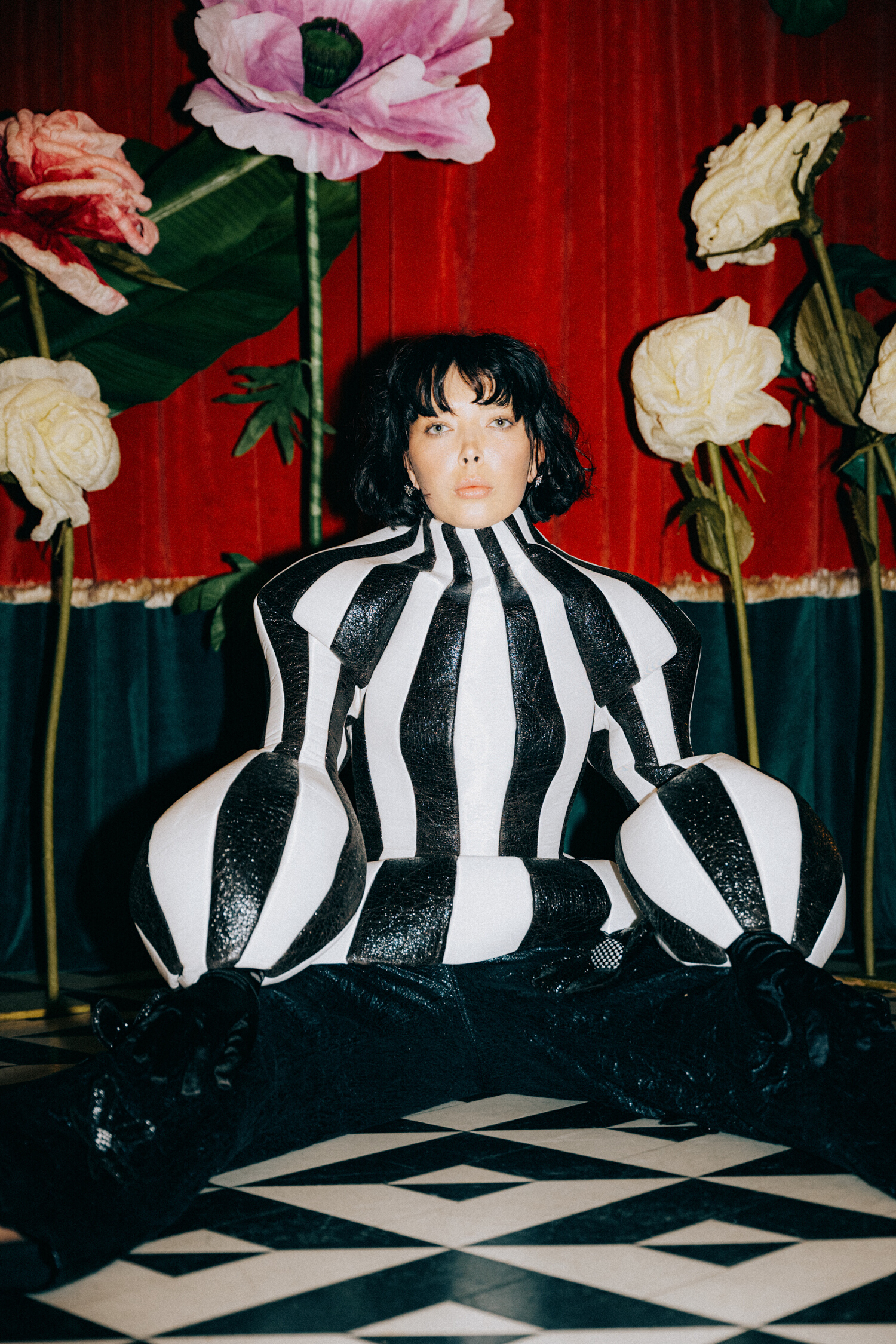
Photography: Linda Tomschiczek
After the 2026 GRAMMYs there was a fun “Looks to Books” trend in which people match a celebrity outfit to a book. Aside from Little Red Riding Hood, what other book characters do you feel would suit the IN BLOOM collection?
I’m drawn to characters that exist between reality and imagination. Alice in Wonderland is one of them—there’s this sense of curiosity and transformation that feels very close to IN BLOOM. At the same time, Jane Eyre represents a quieter kind of strength and introspection. Both reflect different aspects of becoming.
Follow Jennifer Milleder on Instagram
www.jennifermilleder.com
Words: Nmesoma Okechukwu
Edited by Florentyna Syperek
Thanks to LIMITÉE PR