
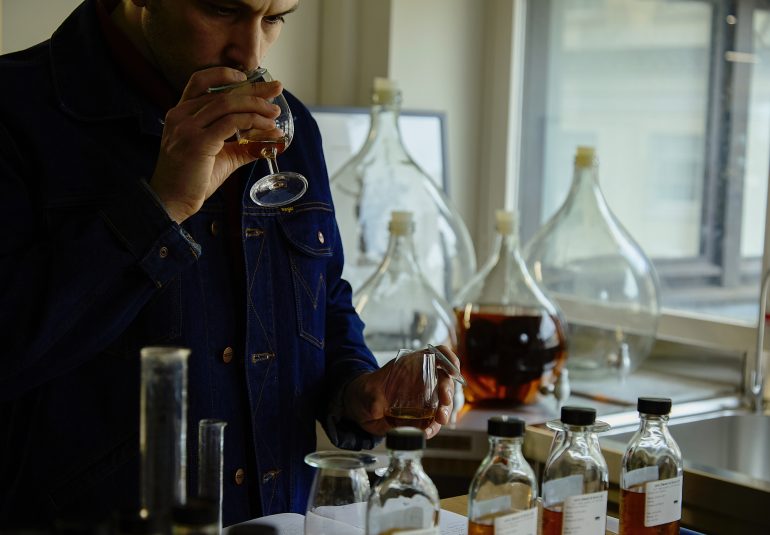
There are certain things you expect to find when you walk into an office. Desks, computers, perhaps a slightly depressing communal kettle. An extremely sophisticated, fully stocked bar is generally not one of them.
But Compass Box is not interested in doing things the expected way.
Arriving at its Richmond headquarters after getting slightly lost, we were welcomed with what is arguably the best possible antidote to poor navigation: a glass of very cold whisky. Hedonism, Compass Box’s blended grain Scotch, had been kept in the freezer and was served almost frozen. Silky, cold and dangerously easy to sip, it immediately dismantled at least one assumption about how whisky ought to be drunk.
That, as it turned out, was rather the point.
Founded in 2000, Compass Box describes itself not as a distillery, or even simply as a blender, but as a group of “Whiskymakers”. The company has built its identity around questioning some of Scotch’s more established conventions and placing flavour at the centre of the process. CEO Nishat Gupte introduced us to this philosophy before the tasting began, speaking about the desire to find routes through whisky-making that have not necessarily been explored before.

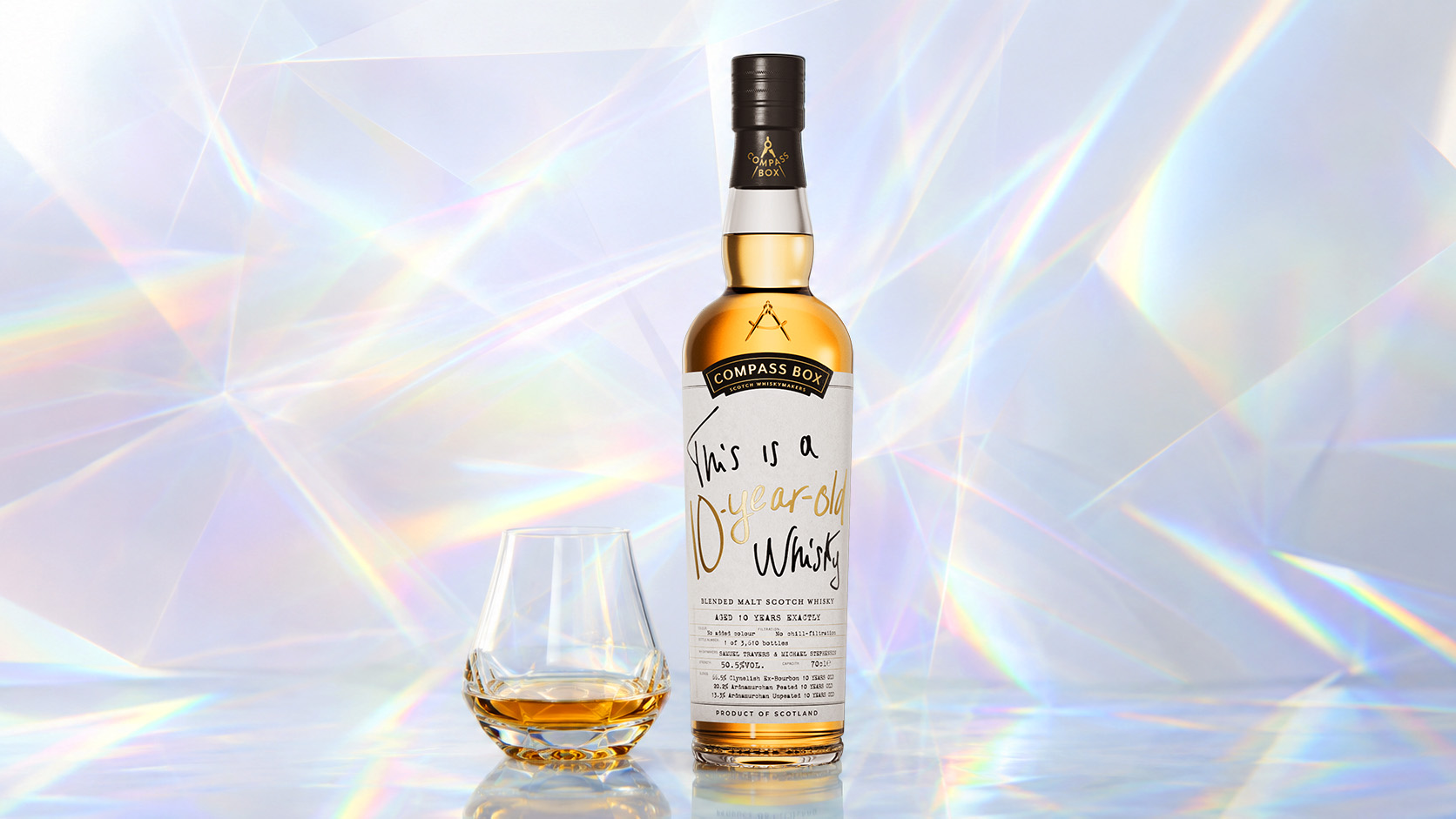
That philosophy also runs through the brand’s latest release, This is a 10-Year-Old Whisky, a limited-edition blend of three single malts from Clynelish and Ardnamurchan, each aged exactly ten years. Limited to 3,610 bottles, the release continues Compass Box’s emphasis on transparency, with the age, origin and proportion of every component disclosed in full.
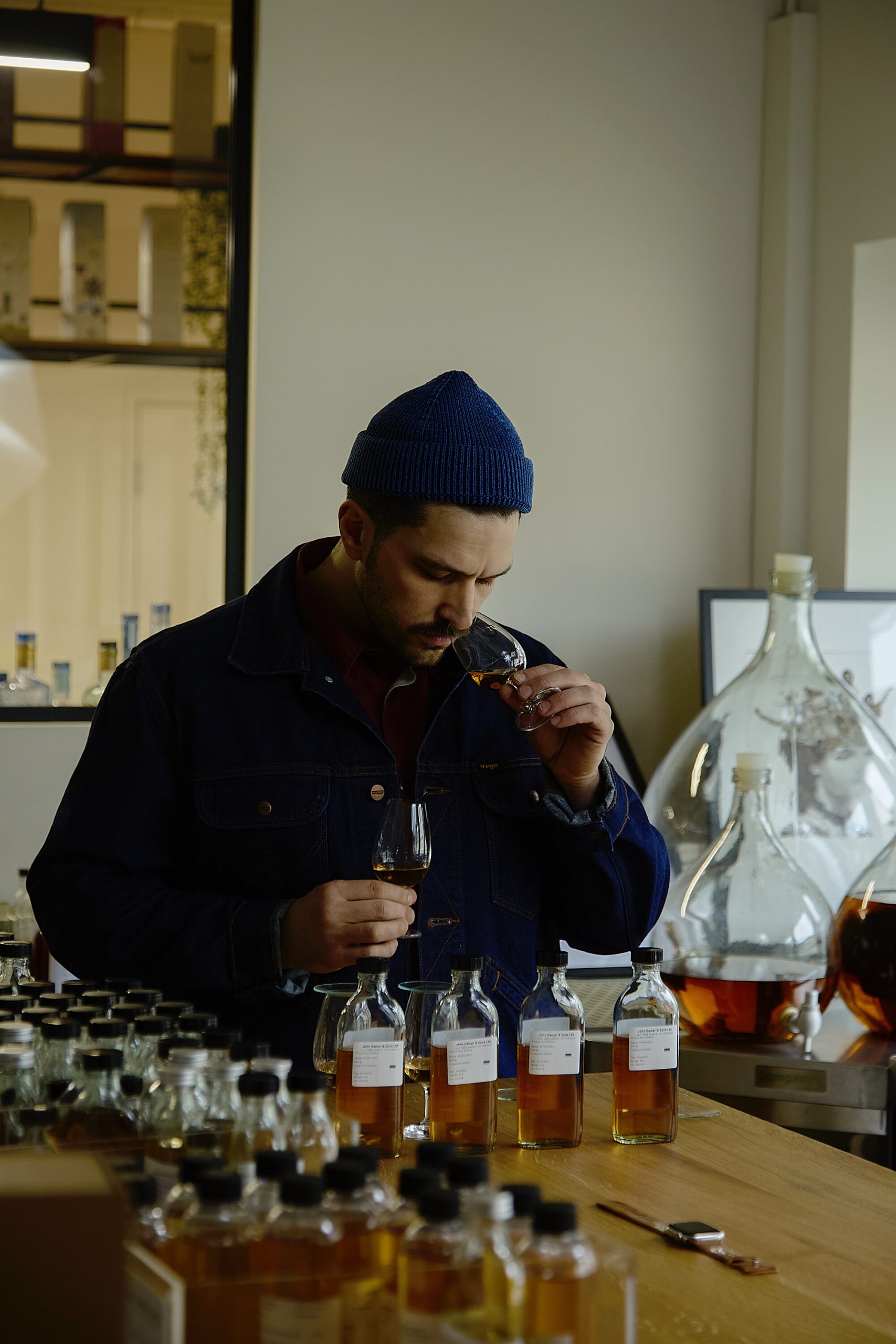
It is an ethos that becomes obvious from looking around the place. The Richmond office is beautiful, lined with shelves upon shelves of whisky, while the bar greets you almost immediately upon entering. Further inside, the tasting and blending room feels somewhere between a bar and a laboratory. Bottles and samples line the walls and there is a distinct sense that this is where things are pulled apart, tested and put back together differently.
Our tasting began with whiskymaker Michael Stephenson asking us to think about something that sounds incredibly obvious until somebody actually makes you do it: what exactly are you experiencing when you drink something?
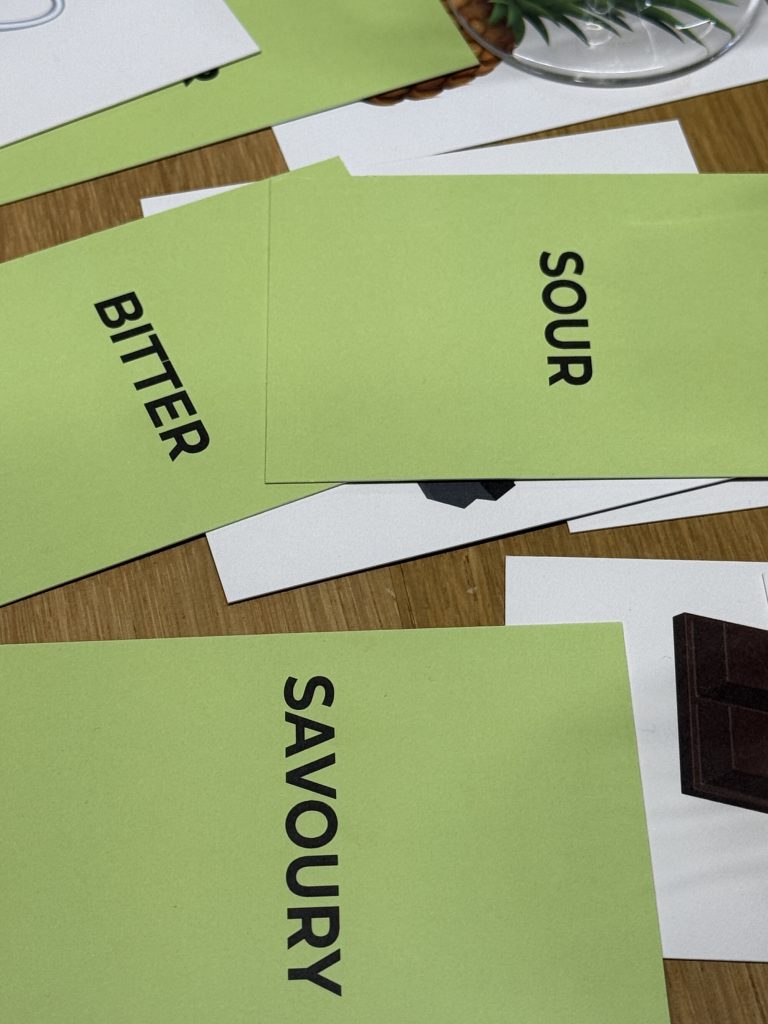
Smell, flavour and texture were separated rather than bundled into the vague assessment of whether a whisky was “nice”. Across several Compass Box whiskies, including Orchard House and new make spirit, we were asked to isolate each sense. Cards depicting everything from apples and pears to bacon, coal, honey and toffee were scattered across the table, and we chose the images we associated with what we could smell and taste. For texture, the imagery changed again: silk, feathers, weights.
There was something unexpectedly playful about it. Whisky tasting can sometimes have an intimidating vocabulary attached, as though somewhere there is a correct answer and everyone else in the room has secretly been given it. Here, matching smells and sensations to pictures felt closer to a childhood classroom exercise, except everyone was drinking Scotch.
More importantly, it worked wonderfully. Paying attention to one sense at a time made differences that might otherwise have gone unnoticed suddenly much more obvious. Rather than being told what we were supposed to find in the glass, we had to actually find it ourselves.
That accessibility was one of the afternoon’s biggest successes. You did not need to arrive armed with an encyclopaedic knowledge of Scotch to participate, nor did it ever feel as though there was a stupid question to ask. For anyone who enjoys whisky without necessarily knowing the intricacies of how it is made, the tasting offered a way to learn without making a lack of expertise feel like a barrier.
Throughout the afternoon, we also had the chance to speak to whiskymakers Angela D’Orazio and Sam Travers, as well as Michael, and simply ask them about whisky. For people with an extraordinary amount of knowledge about what they do, everyone was remarkably generous with it. They were friendly, curious and happy to explain rather than perform expertise at you. What could easily have been an intimidating experience instead felt completely relaxed.
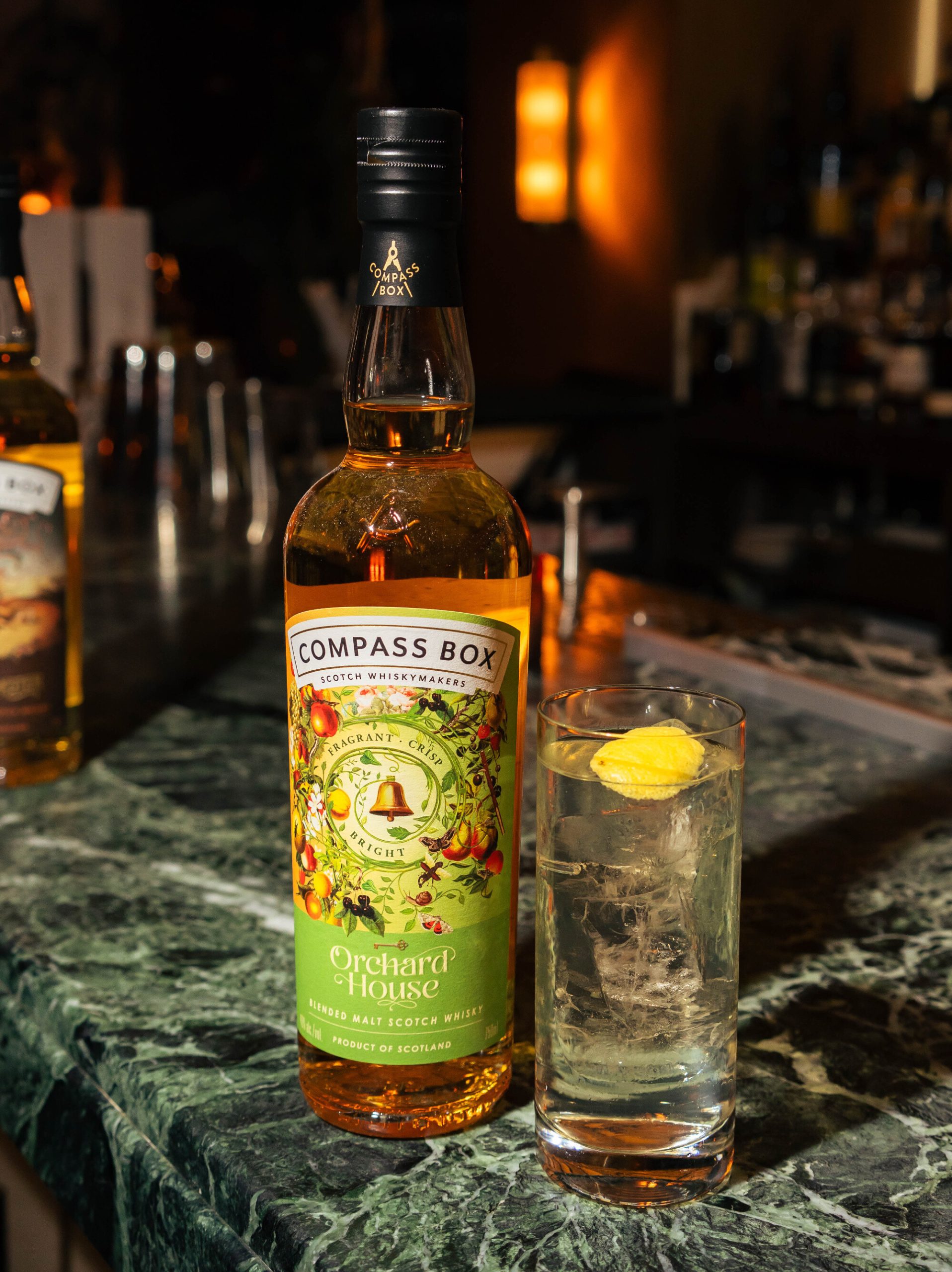
That approach feels appropriate for Orchard House, Compass Box’s signature blended malt. The whisky is deliberately fruit-forward, with the brand identifying apple, pear, honey, vanilla and Earl Grey among its characteristics. But it was what happened to Orchard House next that became one of the most convincing demonstrations of Compass Box’s approach.
They simply added soda.
The Orchard House Highball is almost suspiciously simple: whisky, soda and a citrus garnish. Yet the simplicity did not flatten the whisky so much as open it up. Light, crisp and incredibly drinkable, it made a compelling argument against the idea that good Scotch must always be approached neat, solemnly, and preferably while sitting in a leather armchair.
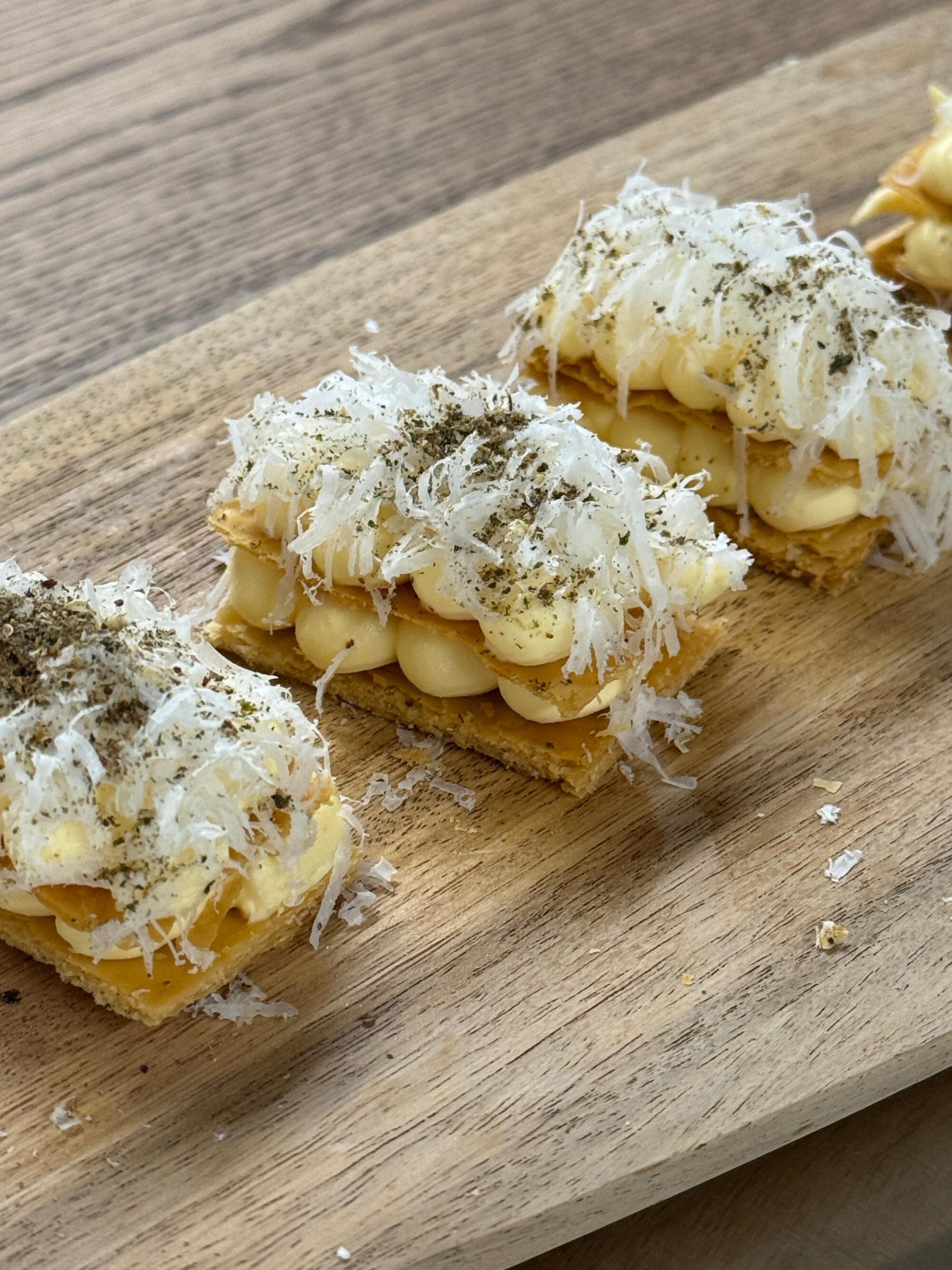
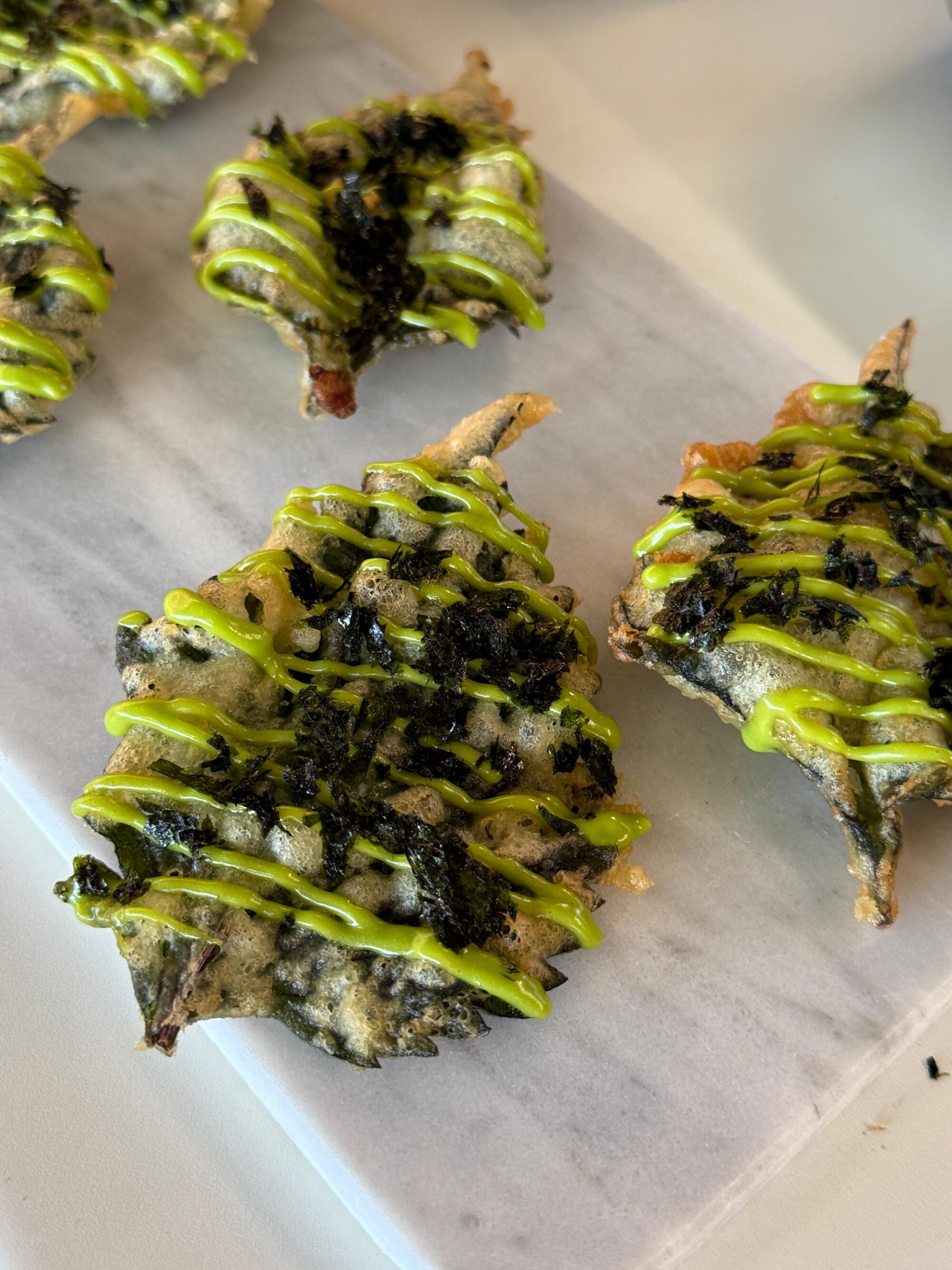
Food from chef James Sharp accompanied the drinks, and somehow one of the most memorable things from the afternoon was an ice lettuce leaf. Dressed simply and served alongside the tasting, it had absolutely no business being as good as it was alongside the Highball. It was the first of a series of small plates and bites that moved between savoury, smoked and sweet flavours throughout the afternoon.
The Highball was also the link to Japan, where the serve has become deeply embedded in drinking culture and where Compass Box has recently been working with Orchard House. Back at the bar, we tried Michael’s Green Tea Highball, which took the simplicity of the earlier drink in another direction. Refreshing, delicate and still unmistakably whisky-led, it was a highlight of the afternoon and the sort of drink that makes you wonder why whisky and green tea have not always been obvious companions.
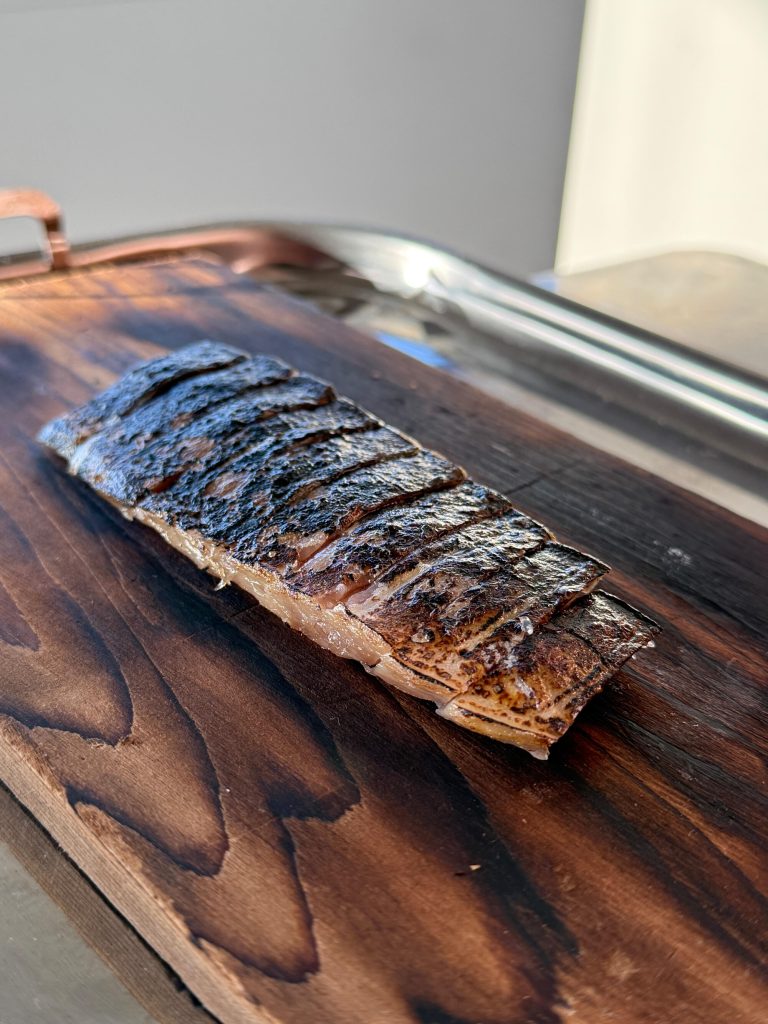
By this point, the afternoon had moved away from anything resembling a formal tasting. We mingled around the bar, more of James Sharp’s food appeared, including smoked fish and sweeter bites, and glasses continued to circulate.
Before leaving, there was time for one more glass of freezer-cold Hedonism, returning the afternoon neatly to where it had started.
Hedonism has a particularly fitting place in the Compass Box story. It was the company’s first whisky, released in 2000 as a blended grain Scotch at a time when grain whisky received considerably less attention than malt. Its visual identity challenged convention too, with Compass Box stating that Hedonism was the first bottled Scotch to feature a woman on its label. Now released annually in limited quantities, each edition invites a female artist to reinterpret that original figure.
The bottles themselves are beautiful, but after an afternoon at Compass Box, that feels like part of a much bigger preoccupation with how whisky is presented, perceived and experienced.
We did not leave empty-handed either. Alongside a notebook for recording future whisky observations, we were given a canned Highball and a bottle of Orchard House to take home. After spending an afternoon learning to actually pay attention to what is happening inside a glass, the notebook may even end up being used for something more sophisticated than writing “this one is nice”.
Whisky comes with rules. Or, at least, we tend to give it rules. Drink it neat. Know your regions. Understand your peat. Have an opinion about single malts. Compass Box seems far more interested in asking what happens when you loosen some of those expectations. Crucially, that extends beyond what is inside the bottle. Their approach to whisky feels welcoming rather than gatekept, allowing curiosity to be enough of a qualification to join in.
Sometimes the answer is an intricate experiment in blending and maturation. Sometimes it is a sensory exercise that makes a room full of adults play with picture cards. Sometimes it is green tea. Sometimes it is putting the whisky in the freezer. Sometimes, inexplicably, it is a really excellent piece of lettuce to go with your whisky. Whatever the answer, Compass Box makes a convincing case that whisky gets a lot more interesting when you stop worrying about how you’re ‘supposed’ to drink it.
Follow Compass Box Whisky on Instagram
www.compassboxwhisky.com
Words: Tara Choudhary