
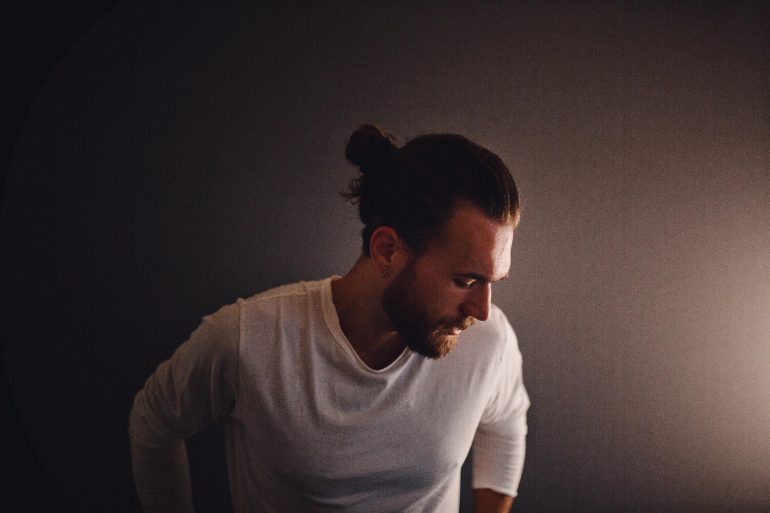
Nation Haven has always made music that finds grandeur inside difficult emotions, but ‘Fall Apart‘ pushes that instinct somewhere more searching. Written, recorded, produced, mixed and mastered entirely by Virginia artist Nate Alger, the cinematic pop single reframes collapse not as defeat, but as the point at which a more honest version of yourself can begin to emerge. Starting with little more than voice and piano before swelling into drums, strings and French horns, ‘Fall Apart’ mirrors the emotional journey at its centre: the destruction of comfort, certainty and familiar identity in pursuit of something truer. Inspired by an imagined figure burning down a seemingly perfect world before walking alone into the unknown, the song draws closely from Nate’s own experiences of upheaval, healing and spiritual questioning, transforming forgiveness, grief and surrender into something expansive enough to feel almost devotional.
In our conversation, Nation Haven goes beneath the cinematic scale of the record to examine what transformation actually demands. He reflects on the things we sometimes have to consciously destroy in order to stop living inside false security, the difference between letting go and simply moving on, and how his relationship with spirituality has evolved since stepping away from the faith structure he grew up within. He also considers the tension between making pain sound beautiful and preserving its emotional truth, the future self he appears to address in the song’s prayer-like final moments, and how his forthcoming debut album may reveal dimensions of Nation Haven that listeners drawn to his darker, romantic viral releases have yet to encounter. As a project originally created to process his own upheaval becomes a refuge for millions of listeners navigating theirs, ‘Fall Apart’ finds Nation Haven asking what a haven should offer once survival begins to give way to renewal.
‘Fall Apart’ is built around the idea that collapse can be a form of renewal. What did you have to stop seeing as a failure before you could understand it as the beginning of something new?
At some point I had to stop looking at failure in general as the end. Failure is a necessary part of life. If you’re not failing, are you really even trying? Are you actually challenging yourself to grow or are you complacent and scared to move forward? If I were to be more specific, when it comes to my music, I had to get over my singing voice and seeing my voice as a failure. I used to think I had to sound a certain way or else I would fail as an artist.
Ironically it was that mentality that was tearing me and my music down. Once I embraced my voice and stopped trying to be like anyone else, I really felt my voice come alive more. I even got compliments from fans and they had no idea about my own breakthrough. What an older version of me would have seen as failure, really started a fire in me to be completely myself and embrace my voice in my music.
You’ve described the song through the image of a figure burning down a place of comfort and perfection before walking into the unknown. What part of yourself did that imagined landscape allow you to express that straightforward autobiography could not?
I think there’s a time and place to say something straight forward and then a time and place to be more poetic and imagery based. It’s like they say, “A picture is worth a thousand words”. To me, if I would have just said the thing, instead of describe the image, the song probably would have turned into a very words sort of rap cause that would be a lot of things to explain haha.
If I could simply describe the image, and have that image tell the story, then the wording is much simpler and instead of the listener gaining head knowledge, they have a sensory experience while listening and using their imagination. That to me is far more powerful than simply stating what is. And like I said, there’s a time and place though. So what part of myself was expressed? The mystic storyteller in me.
The lyric “I broke my own heart so I could feel alive” suggests that transformation sometimes requires becoming the person who ends your own illusion of safety. What have you had to consciously destroy or leave behind in order to become more honest with yourself?
This question hits deep and is a deeper part of where this song came from. Years ago I was following the Christian path and the deeper I went, the more my eyes opened to the destruction religion can cause, and the scales I had grown over my eyes from growing up in that religion. I grew up as a pastor’s kid, so leaving behind my childhood religion wasn’t easy. I tried to stay and go through the motions, telling myself it was some sort of test of faith.
The more I did that, the more hypocritical I felt. I felt so fake and inauthentic, so I had to leave. Once I did, I felt so free and knew I had made the right choice, as hard as it was. Years later I feel more myself and honestly closer to God or Source or Universe or whatever you want to call it then I ever did when I was following the Christian path.
‘Fall Apart’ begins with voice and piano before expanding into drums, strings and French horns. When you are producing alone, how do you decide which emotions need intimacy and which need something almost cinematic in scale?
I have fun with both of those concepts a lot. For instance, if something feels intimate, sometimes I flip that idea on its head and make it into something cinematic because oftentimes the most intimate places are the most sacred and the most powerful. Then there’s times where it feels appropriate to do the opposite and keep the intimacy to just voice and piano. I truly just follow where my gut and musical ear takes me. I don’t really have a plan. If I get stuck on where to go next I will listen to what I have of the song sometimes hundreds of times until I get the feeling of where the song should go. A big part of that is knowing what story I’m trying to tell.
You connect forgiveness with grief, the idea that releasing something means mourning the identity, belief or relationship attached to it first. What has forgiveness taught you about the difference between letting go and simply moving on?
Can you really move on if you haven’t let go? I don’t think it’s a straight answer. I know that grief really isn’t something that’s linear. Grief comes in waves and you get to feel those emotions as they come up. I think the same thing is the case with forgiveness. I think forgiveness is a choice to be had everyday. A lot of people get the idea of forgiveness wrong. They think forgiveness is giving more of your energy away when in reality it’s calling your energy back to you.
When you can detach from what was holding you back and reclaim your authentic energy, then you can move forward. And sometimes that’s a hard thing for people to do because they have attached their identity to what was draining them, so they feel like a part of them is dying. So like I said, I think forgiveness and grief are really intertwined and it’s not as straight forward as some may think.
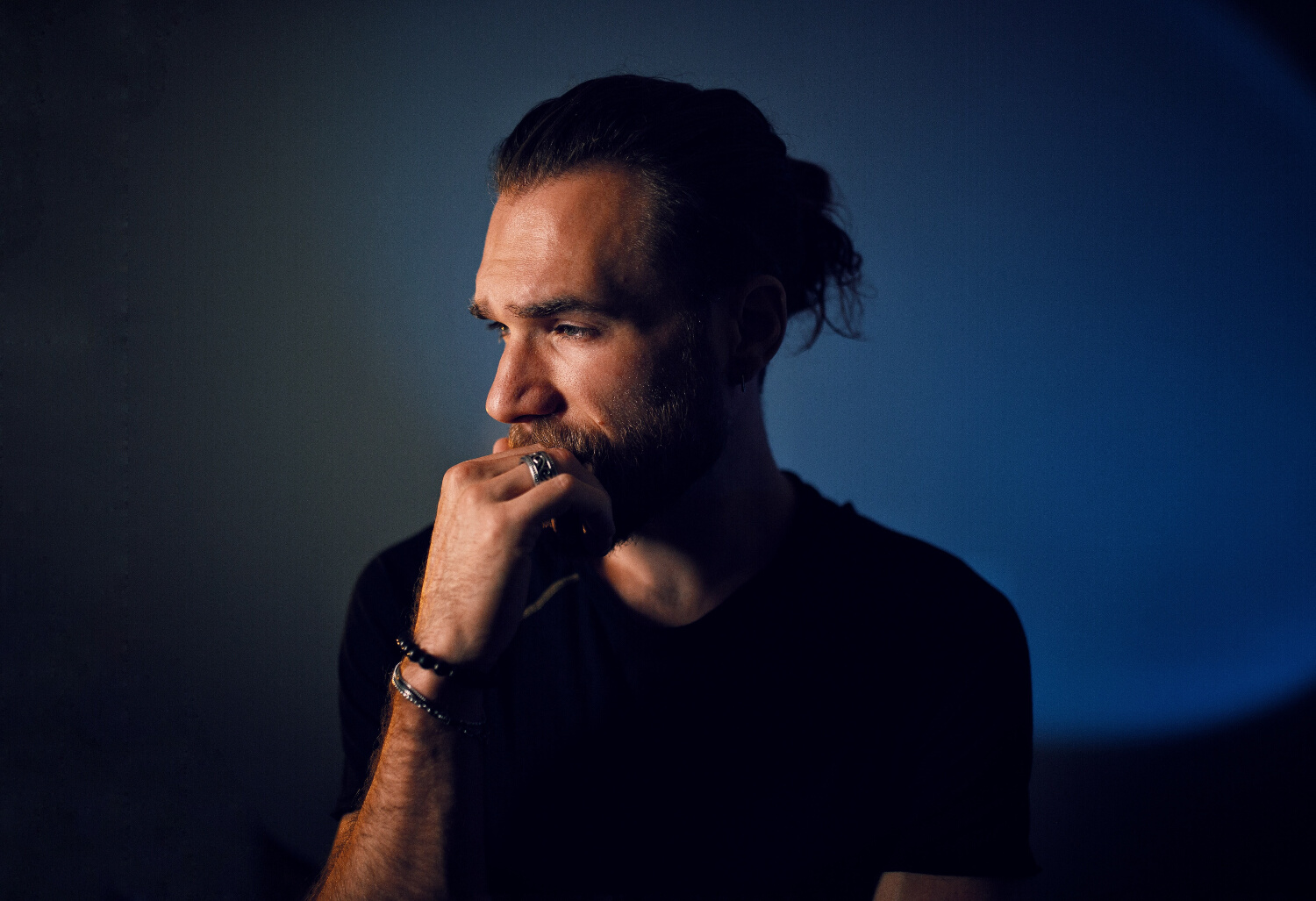
By the final chorus, the song begins to feel almost like a prayer addressed to a future version of yourself. When you write towards that future self, are you imagining someone you hope to become or someone you already believe exists underneath everything else?
One hundred percent the latter. I know that person already exists. And I feel its that way with everyone as well. We are already the person we seek. That person is just covered up with a lot of fear, grief, pain, bitterness, and unforgiveness. Once you are able to move though those emotions and overcome a lot of those things, that’s when you realize that person was always there. YOU were always there. You were just in your own way.
You grew up as a pastor’s son and first experienced music through church before stepping away from that faith during one of the most difficult periods of your life. How has your relationship with spirituality changed now that it exists outside the structure you were raised in?
That’s a BIG question haha. Simply put, I feel much more free to love unconditionally. I didn’t realize how many conditions I placed on love, for myself and for others, until I left religion. The other thing I’ll say is I feel so much more in tune with my physical body now. Like, I feel much more grounded. All that said, one thing I’ve learned in retrospect is that religion had its place in my life, and I’m grateful that was my upbringing, and I’m also grateful that I “woke up”, and now on my own path.
Your music often places deeply personal pain inside arrangements that feel enormous. Do you ever worry that cinematic production can make suffering feel too beautiful, and how do you keep the emotional truth from disappearing inside the spectacle?
I can honestly say that’s nothing I’ve ever worried about because that’s almost the point. I think a lot of the world today avoids and hides from our feelings. We cope using social media doomscrolling or your drug of choice, alcohol or smoking or whatever. I think that if we were to rid ourselves of fear, then we would have the courage to face how we feel, and in turn begin to heal not only ourselves but our world that surrounds us.
I personally have this conviction that If I can make heartbreak feel beautiful, then that may give people the courage to stop coping and look deep within themselves to feel their feelings and overcome fear. I think if suffering is made to look big and bad and scary, then naturally people will avoid it. But If suffering looks like a beautiful part of life, then people will be encouraged to truly live.
Your viral songs introduced many listeners to a darker, romantic side of Nation Haven, while ‘Fall Apart’ moves towards forgiveness, identity and spiritual renewal. Does the debut album represent a chance to show a version of you that your audience has not fully encountered yet?
I think so, yes, and by that I mean that I don’t feel that spirituality and sensuality/romanticism are separate. They are just two small parts of what it means to be human. That said, I think a lot of my audience does see those things as separate. So for me the album is about bridging that gap. Definitely some new things, and some of what I’ve already put out, and a lot of bridging the gaps between how people perceive all of it.
Nation Haven began as somewhere you could process your own upheaval, but it has since become a space listeners enter with their own experiences of love, loss and darkness. As the debut album comes into focus, what do you want that “haven” to offer people now that it could not offer you when you first needed it?
A place to feel what they have maybe been afraid to feel. A place that’s gives then the courage to look deeper within. And a place that gives shows them their joy that makes them want to get up and dance. That’s something we all don’t do enough in my opinion haha.