
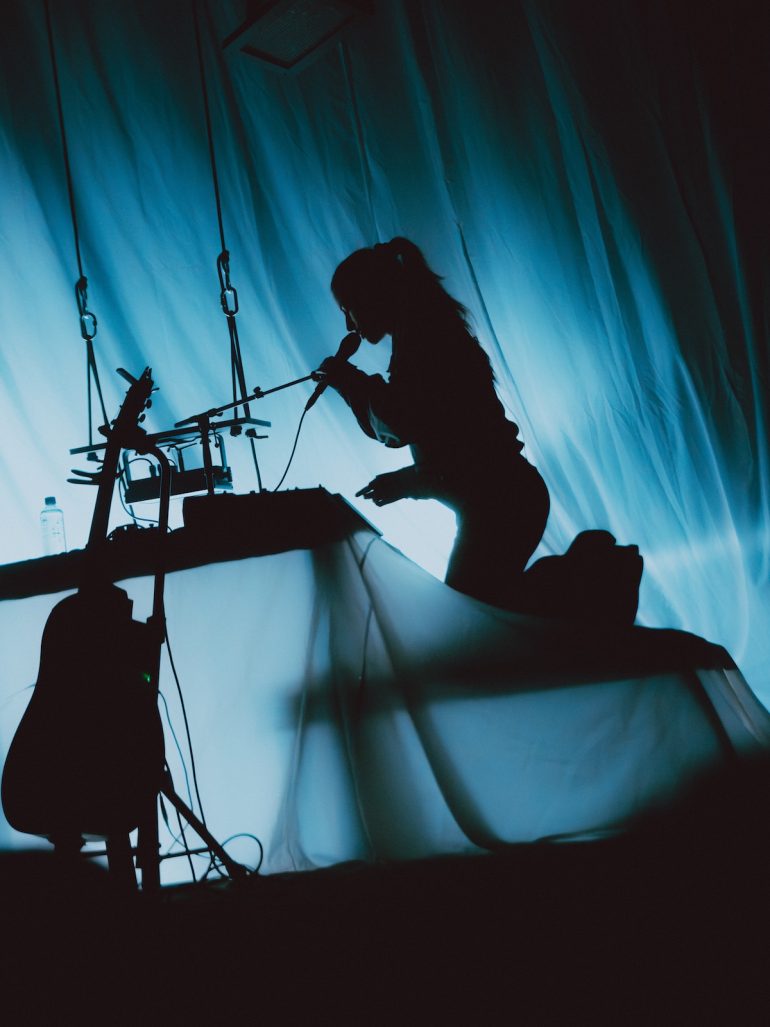
I remember being very annoyed by a review of Oklou’s LP choke enough that suggested that even though it had an imagery and a direction it was headed, it didn’t build up to anything memorable, and it didn’t even try to get your attention. This criticism reminded me of how people were extremely critical and skeptical about Richard Linklater’s movie Boyhood, simply because they felt like “nothing happens in it.” Well, I am here to tell you why that critique is incorrect. After her 2020 mixtape Galore, the French composer, singer and DJ Marylou Mayniel (aka Oklou) released choke enough and we were lucky enough to see her showcasing it at Melkweg in Amsterdam. Following a warm-up by Jazz Lambaux, the audience was expectant, fine-tuning their senses before the electronic fairytale they were about to witness. The performance was not just a successful execution of her album but a poetic rebuttal (or, more plainly, a karma slap) to those who failed to grasp the project’s reflective and necessary quietude.
The stage scenography was very theatrical and minimalistic, featuring a swing in the middle of the stage and a white sheet in the back. This sheet later projected images, creating a feel that was very analog within Oklou’s futuristic universe which somehow felt like being underwater. She started off very strong with “ict”, “thank you for recording” and “obvious”. The musician accompanying her, longtime producer and collaborator Casey MQ, handled the electric guitar with a blue laser at the end and a bunch of distortion. There were even elf visuals at some points, alongside songs with very pristine sounds that resembled tubas, trombones, French horns, and muted trumpets that felt like they were being played by Takuya Nakamura himself. She dedicated “harvest sky”, her song with Underscores, to all her French companions. The track fuses synths that evoke Eurodance classics with a distorted sort of liquid drum and bassy twist.
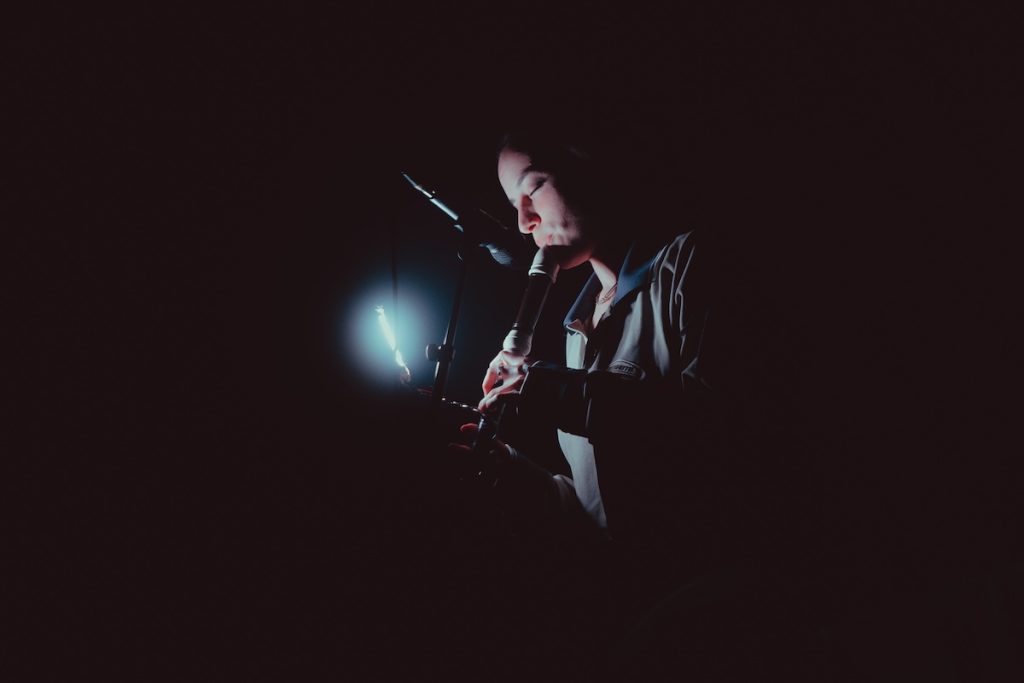
The orchestral elements present in her modern and futuristic music hint strongly at Oklou’s classical background. Her training in classical music, especially piano pieces, helped her understand why specific melodies, like those from Debussy, appealed so much to her: the answer lies purely in melodic structure. In this album, the synthesizer is the main voice instead of the piano, while Mayniel’s role is more that of a narrator or backup singer, a point she recently made in a Pitchfork interview. She fully showed her face after the Ecuador of the concert, a very significant act regarding her not entirely being the protagonist of the performance.
Another highlight was the collaboration with FKA Twigs, “viscus”, a very playful and almost extraterrestrial tune that Oklou accompanied by a red light she moved like a pendulum. These alien-like sounds are especially interesting, recalling how a child perceives the world upon entering it, which is maybe not so different from how an alien might perceive it. I was once told by a very interesting producer and close friend (pol_desmond), that to design truly alien sounds, his references were soundtracks of old movies, so how the future was imagined in the past. Given that Oklou was writing this album while pregnant, her music can perhaps be interpreted as an exercise to reflect on what childhood was for her and what she wants it to be for her child, so maybe we could even say: how the future can be imagined through the past…
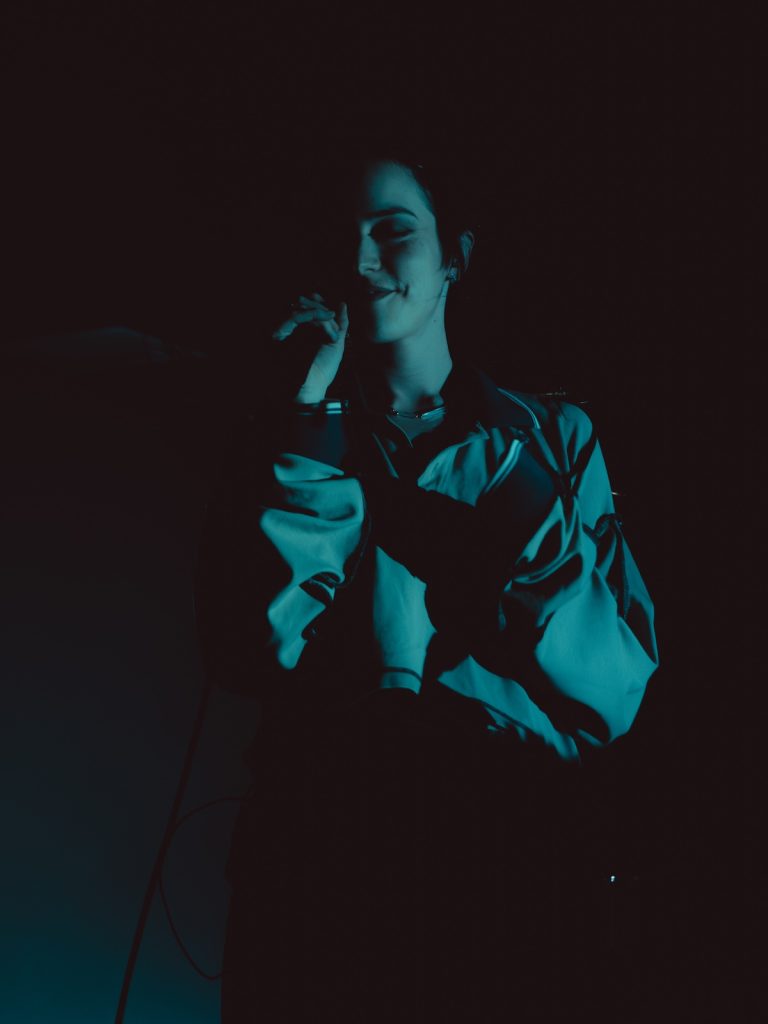
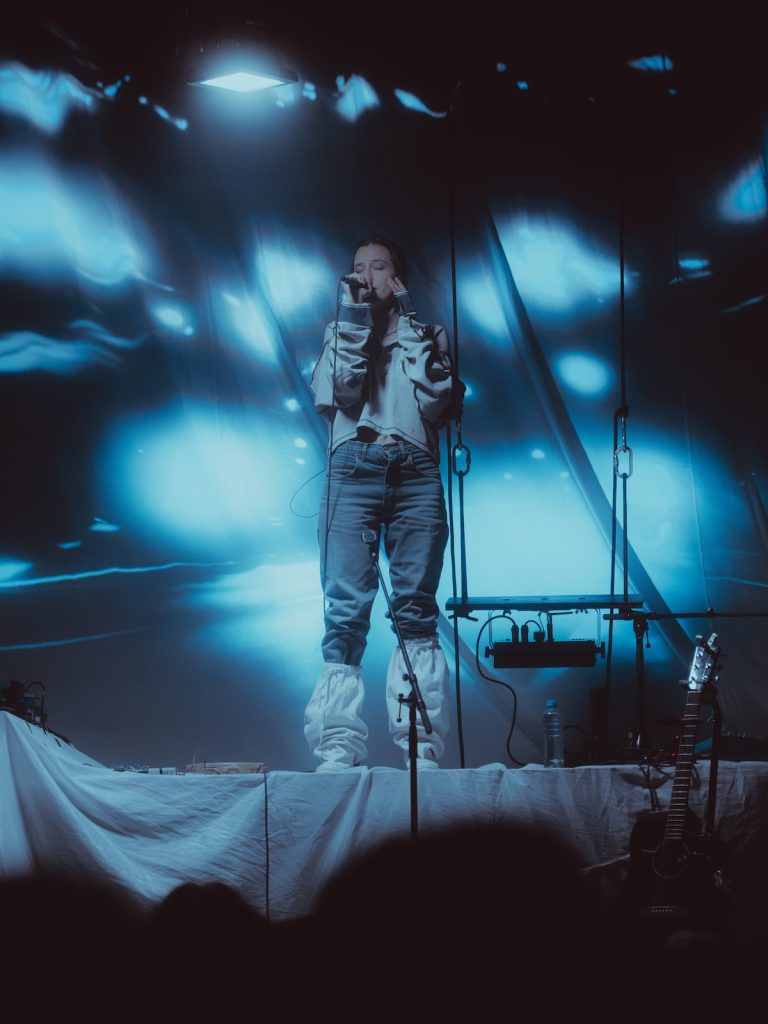
Throughout the concert, the constant elements were the arpeggios and progressions of the synths, mostly using minor chords, which added to the album’s consistent melancholic vibe. The use of muted drum sequences is particularly notable and revolutionary at a time when maximalist pop is so successful. While celebratory hyperpop is great (shoutout to BRAT and The Rise and Fall of a Midwest Princess), there is something profoundly refreshing and pleasant about a quiet album. It makes you reflect on nostalgia and truly listen and appreciate it for what it is. It’s not tiring your brain; it’s restoring it. The audience accurately reflected this quietude, it was almost like a collective performance of being present.
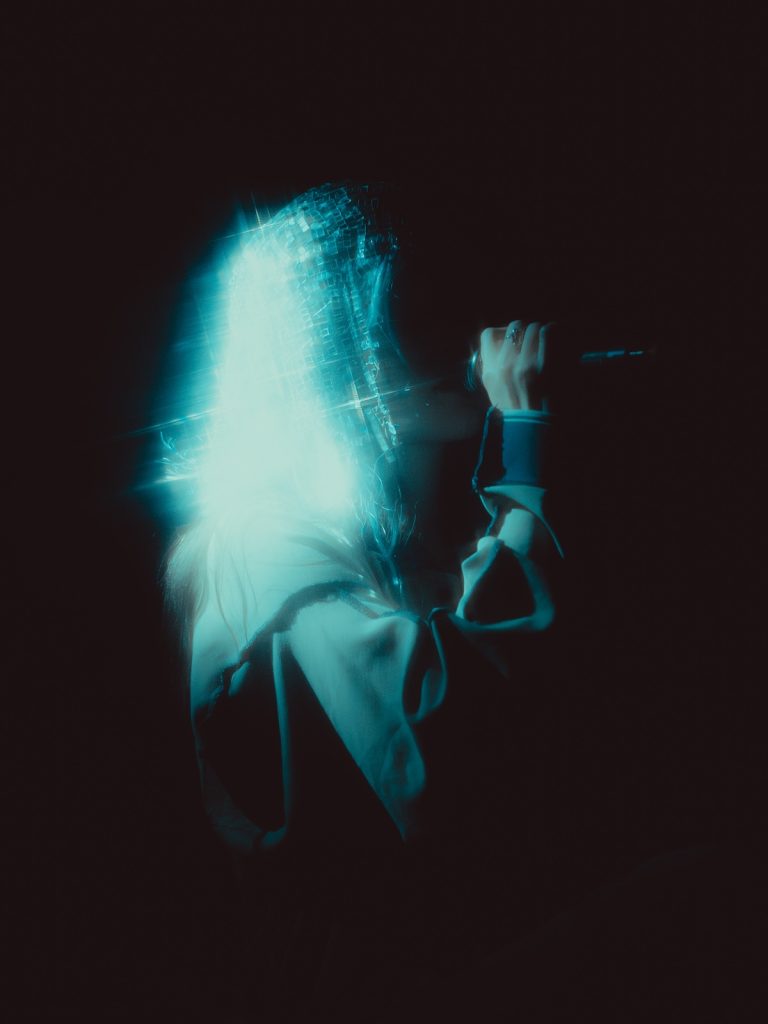
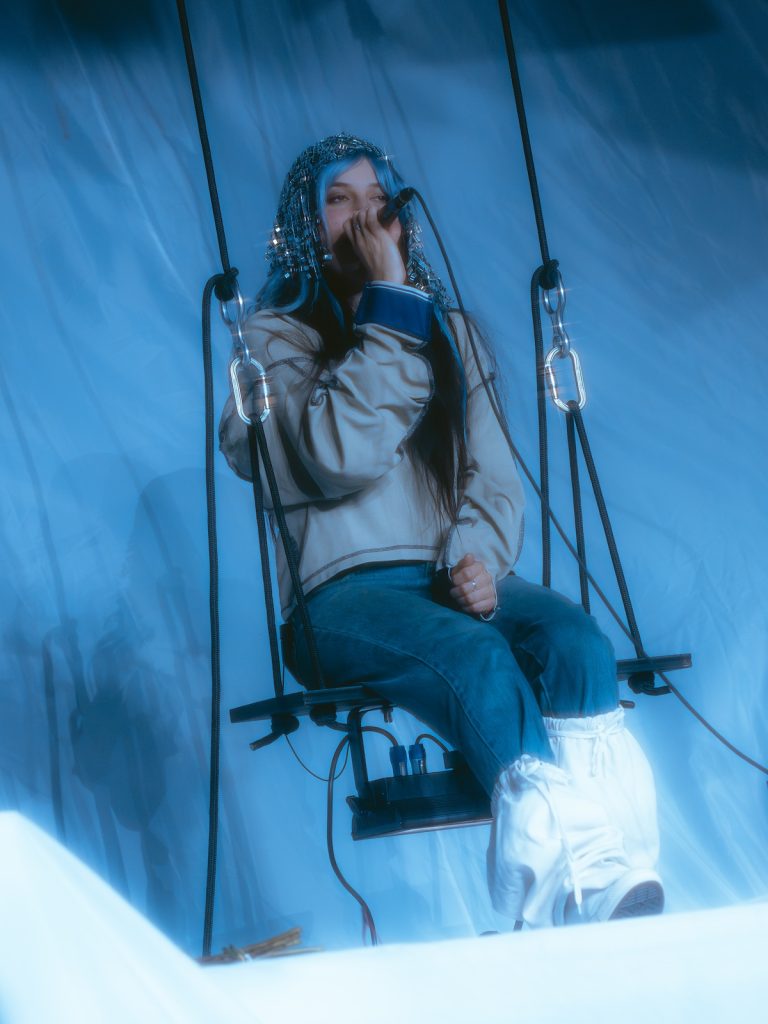
The end was a beautiful blend of “choke enough” with “ict”. After an ovation, she returned and said: “It would’ve been crazy for this to end when we didn’t even touch the acoustic guitars.” She then played a couple more songs and put the cherry on top of the performance with an audience favorite, “blade bird”, a track that feels distinct from the rest of the album due to the prominence of the acoustic guitars and a change in pace.
Lyrically, “blade bird” talks about watching someone you love outgrow you while you, trying to protect them, become the one holding them back from their desires or even their destiny. This theme is based on the traditional Basque poem Txoria Txori by Jozean Artze. The poem, as well as the song, delivers a beautiful and painful perspective about unconditional love, possession and freedom, providing a profound, complex closing to the evening, and maybe even the review.
Follow Oklou On Instagram
Words: Mar Rubio Boné
Photographer: Marc Prodanovic
Appendix: Txoria Txori (A Bird is a Bird)
| “Hegoak ebaki banizkioNerea izango zen,Ez zuen aldegingo.Bainan, honelaEz zen gehiago txoria izangoeta nik…txoria nuen maite.” | If I had cut off its wings,It would have been mine,It wouldn’t have gone away.But, like that,It would no longer have been a bird,And I…I loved the bird |