
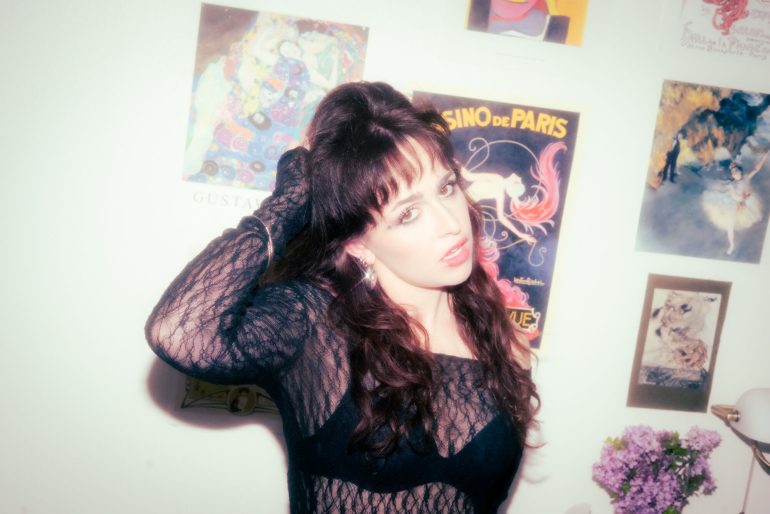
There is something inherently rebellious about deciding you no longer need permission to become the person you already know yourself to be. For Los Angeles-based singer-songwriter Tess Clare, that realisation sits at the heart of her debut album Diva 98, a cinematic indie-pop record born from creative frustration, uncertainty and the decision to stop waiting for a larger audience, a bigger team or somebody else’s validation before making the work she wanted to make. Across its 13 tracks, Tess transforms the contradictions of becoming, ambition and insecurity, visibility and erasure, confession and spectacle, into a heightened world where ordinary experiences take on mythic proportions. Central to that world is the word “diva”, once used to characterise her exuberance and desire to take up space, which she now reclaims as a symbol of audacity, vulnerability, beauty and self-belief. Drawing inspiration from artists including Charli XCX, Lorde, Caroline Polachek and Prince alongside films such as Black Swan, Pearl, Party Girl and Showgirls, Diva 98 finds Tess embracing the theatricality of transformation without losing sight of the emotional truths underneath it.
In our conversation, Tess looks beyond the spectacle to examine what it actually means to write yourself back into your own story. She reflects on reclaiming the parts of herself that had been diminished, the freedom she finds in alter egos and femme-fatale mythology, and why performance can sometimes reveal truths that feel harder to articulate plainly. From the erasure confronted on “One Of Your Ghosts” and the unapologetic power of ‘Hit List’ to the unlived lives haunting ‘Paris (All That I Could Be)’ and the uncertainty waiting beyond album closer ‘Anemoia’, Diva 98 continually asks how much of becoming yourself involves invention and how much is simply remembering who you were before the world taught you to shrink. Having turned the word “diva” from accusation into artistic manifesto, Tess Clare enters her debut album era no longer waiting to be chosen, but still curious about the person who might emerge once the performance ends and the next chapter begins.
You describe Diva 98 as an act of defiance against waiting for permission. What had you been waiting for, and what finally made you decide that the work itself could be the permission?
I think I was waiting for “bigger things”: having a professional team, industry people “watching/scouting” me, online metrics, a “big enough” following… But, I finally realized that I had to see myself in a different light in order for the world to do the same. I was done waiting for approval. All along, I have been organically building a body of work that spoke to me in the moment and revolved around these concepts of success, validation, self-worth… It felt inauthentic to not just make it myself.
“Diva” was once used to describe you as too exuberant or demanding. How did you transform a word that could diminish you into the emotional and visual language of the album?
I took something that was meant to make me feel smaller and instead of letting it shrink me, I reclaimed it as my own. I let it empower me to be louder and prouder. This is the strongest thing anyone can do when it comes to language. For example, “bitch”, “queer”, etc…
The record draws inspiration from films such as ‘Black Swan’, ‘Pearl’, ‘Showgirls’ and ‘Party Girl’. Which of those female characters most closely reflects the tension between ambition, performance and instability explored on ‘Diva 98’?
Definitely ‘Black Swan’. Nina (played by Natalie Portman) embodies the drive, talent, and insecurity within herself that creates a dark and alluring tension as her character navigates her identity and career. The film follows how she is tested and tests herself with the lengths she’s willing to go to make her dream come to life. Those same themes are mirrored in ‘Diva 98’. In ‘Circles in the Valley’, I give voice to my negative, doubtful side that questions my ambitions and longevity. The song deals with wondering “what if” the dream doesn’t come true.
You have described artistry as “alchemizing authenticity through audacity.” Can you trace that idea through one ordinary experience that became heightened or mythic once you turned it into a song?
When writing one of the singles on the album, ‘The Siren,’ I mythologized my experience of moving in with my boyfriend at the time and the fear of being “too much” and in return, metaphorically killing him. I took a deep-rooted, anxious fear of my emotional needs overwhelming another person and transformed it into a dark comedy.
The album moves between private confession and theatrical spectacle. When does performance help you reveal something truthful, and when can it become another place to hide?
I can’t hide when it comes to live performance. That is where my most authentic self lives. Even I am surprised by the truths that sing and move out of my voice and body as I perform, feelings I can’t always access on an everyday basis. I enter a flow-state, a stream of consciousness that is so present and aligned within my mind, body, and spirit. I find performing to be similar to a truth serum, where only raw and real emotions can be reached within and in return, sent out to the audience.
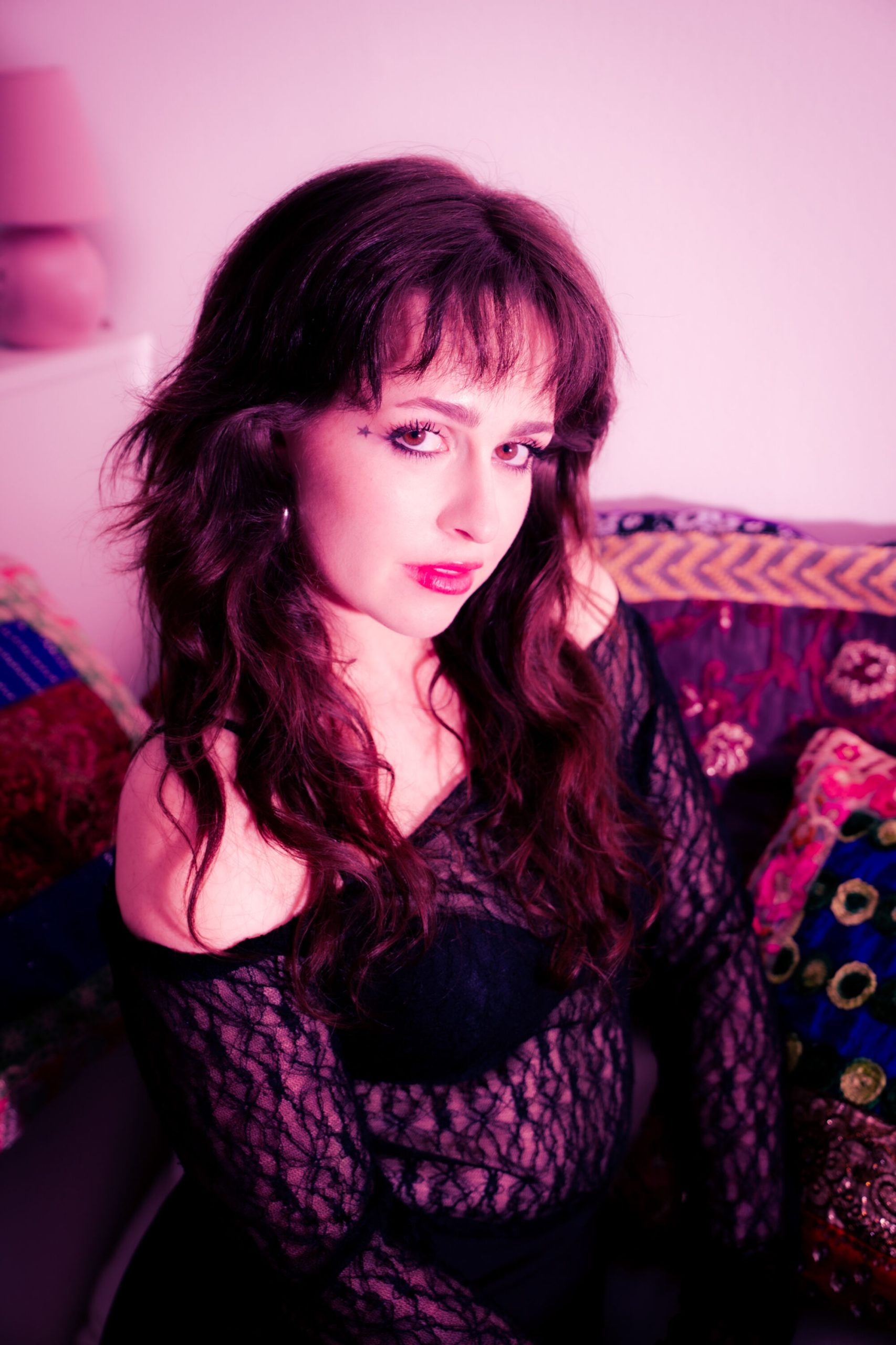
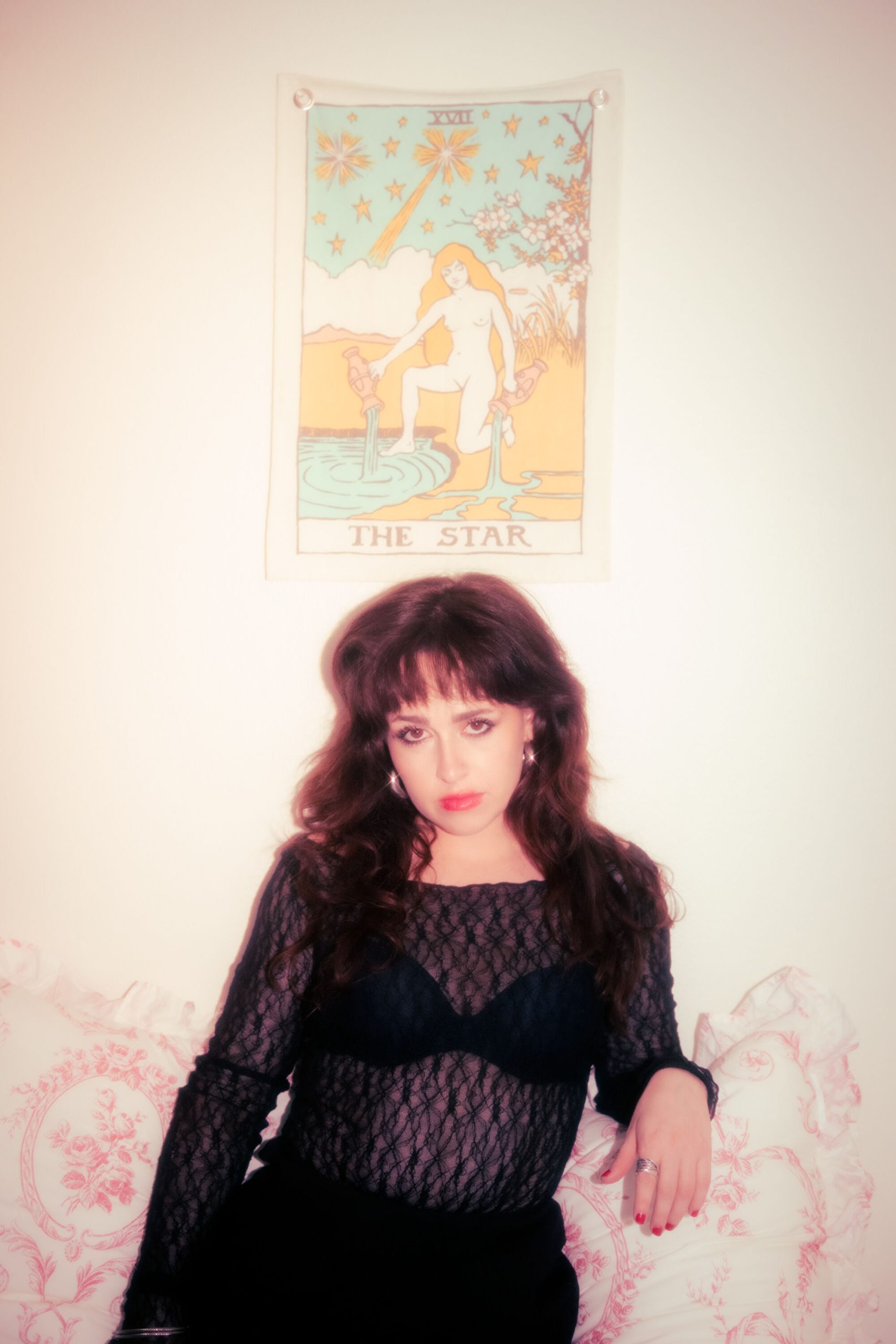
‘One Of Your Ghosts’ turns the experience of being erased into reclamation, while ‘Not Here For You’ pulls you back into your own power. How did you learn to write yourself back into stories where you had felt diminished?
The main reason why I felt called to write songs and tell stories was for this exact purpose, to reclaim experiences where I didn’t feel like enough. To twist a dark, disappointing feeling/ situation and alchemize it into a powerful melody to regain strength and make a greater lesson out of it to only become stronger and wiser as I carry on in my life.
On ‘Hit List’ and ‘The Siren’, you step into alter egos and femme-fatale mythology. What can those heightened characters express that Tess Clare might hesitate to say directly?
For whatever reason, in my everyday life, I am quite a self-depricating person. Anytime I have a strong feeling or opinion, I tend to make a joke out of it or diminish it. I’m not quite sure why I do that so much to be honest. I think on a day to day basis, I feel quite “ordinary” which is totally okay. However, the artist and alter ego in me yearns to create heightened realities and identities that can outlive my human form.
‘Paris (All That I Could Be)’ explores unlived possibilities. Do you see those imagined versions of yourself as sources of inspiration, grief, or pressure?
All of the above. There’s something so romantic & inexplicably magical to let your imagination run wild, envisioning this life you’re creating so effortlessly in your mind. And with that romanticization comes a sigh, a lament of knowing deep down that even if that were to become a reality, would it lose its initial spark? A constant fomo yet also yearning for so much in my life that can be experienced and that I can evolve into.
Why was it important to place your interpretation of ‘La Vie En Rose’ near the end of an album so concerned with romanticising life, desire and becoming?
I once was in love. My first love, a French boy, taught me to sing this song in French. I stopped singing this song because it was his language, but I came to see my love was more: It was Paris. It was la vie en rose. I realized the song was not about romantic love but love for life itself. Although the words & melody are not my own, I honor & channel their essence, that we all possess love & light.
The album closes with ‘Anemoia’, looking towards an uncertain future. After spending the record reclaiming your visibility, what still feels unknown about the person stepping through that final portal?
Despite making this record to rediscover my inner child (or rather inner diva) within my artistry and identity, it feels like ‘Anemoia’ is my subconscious getting a download from the universe: through radically loving all aspects of myself, the light and the dark, I can now see and step through a new portal of life and experience. I am on that journey, and I hope the song provides the soundtrack for others to do the same.
Follow Tess Clare on Instagram
Words: Linda Kadiri
Photography: Wendy Rosales