
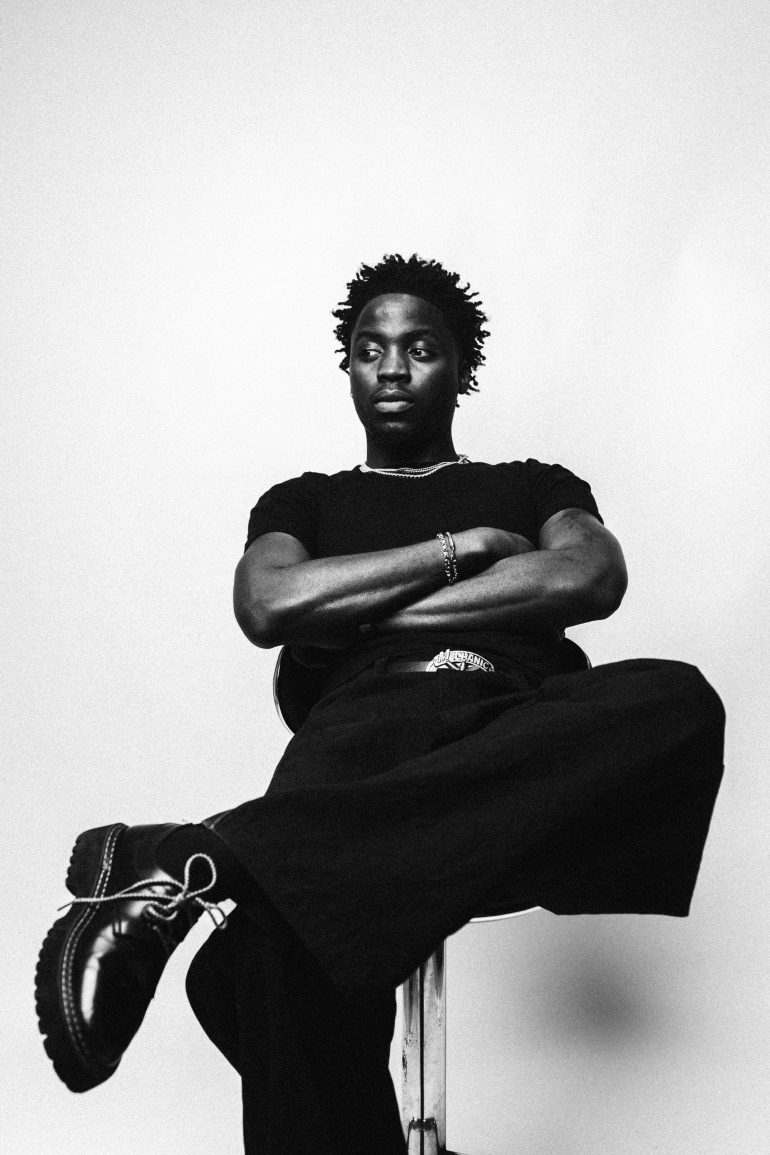
For Kunmie, freedom is not simply the absence of restriction; it is the willingness to keep choosing yourself when expectation, success and circumstance begin closing in. That tension sits at the heart of his debut album 22, a deeply personal record that traces the Nigerian singer, songwriter, musician and producer’s journey through survival, self-belief, love, faith, insecurity and the instinct to escape anything that threatens to define him too narrowly. Arriving after the breakout success of ‘Arike’, which propelled Kunmie to the top of Nigeria’s Official Top 100 and helped push him beyond 300 million career streams, *22* turns the attention inward. Across songs such as ‘Laye Mi’, ‘Pressure’, ‘Abeg O’ and the title track, he revisits leaving home at sixteen, the scrutiny that followed sudden recognition, difficult memories he had long avoided and the private contradictions that exist beneath outward momentum, building an album where vulnerability is expressed with restraint rather than spectacle.
That emotional honesty is matched by a restless musical world that moves between afrobeats, R&B, soul and contemporary African pop while making space for Phyno, Lojay, Wizard Chan, Zlatan, G4ZI and Joeboy without losing sight of Kunmie’s own story. In conversation with Noctis Magazine, he reflects on what success has taught him about being seen versus being understood, why some of his most uncomfortable truths arrive wrapped in lighter melodies, and how faith and purpose have evolved now that some of the ambitions he once chased are becoming reality. He also opens up about the memories behind 22, the self-sabotage buried within ‘Abeg O’, the spiritual questioning of ‘Calvary’, and the challenge of protecting something private while making increasingly exposed music for an expanding audience. At its core, the conversation finds Kunmie confronting a question that runs through the album itself: once you have escaped the boxes other people built for you, what does freedom actually look like next?
You’ve described 22 as a refusal to live inside limitations built by other people. What were the biggest expectations or structures you felt you had to break away from to make this album?
I would say that, to achieve the quality I was aiming for, I had to work with new engineers who could help bring my vision to life. Beyond that, I didn’t really do anything drastically different. If there was one major change, it was that the engineering process became much more advanced.
There’s a constant tension on the record between wanting freedom and wanting somewhere or someone to feel safe. Do you see restlessness as something that protects you, or something you’re still learning to control?
I’m still learning to control it.
I think creatives, in their most natural form, are restless people. There are always a million thoughts running through your mind, some are negative, some are ideas, some are criticisms of those ideas, and others are about how to execute them.
So I think restlessness is a natural part of being creative. It’s something I have to manage every day, and I’m constantly learning how to live with it in a healthy way.
The title track “22” forced you to revisit memories you had spent years avoiding. What made you decide that this was finally the moment to confront them rather than keep moving past them?
To be honest, I never said I was avoiding those years.
The reason I don’t speak about that period carelessly, or even often in interviews, is because I don’t think there’s ever enough time to properly explain what happened. It wasn’t something that happened in a single day, it was a significant chapter of my life.
I’ve always felt that if I was ever going to tell that story, it would either be through music or through a short film. Those are the only mediums that allow me to tell it the way it deserves to be told.
So going back to that period wasn’t about being afraid of the memories. Those experiences shaped who I am, and because they’re so important to me, I don’t think they’re stories I can tell casually. If I’m ever going to share them, I want to do it in the right way.
‘Pressure’ came out of the criticism and industry noise that followed ‘Arike.’ What did sudden success reveal to you about the difference between being recognised and actually feeling understood?
I actually didn’t make ‘Pressure’ to be understood. I made it because I wanted to share those thoughts.
The interesting thing is that I wrote the song before the pressure even started. I could already see that those challenges were coming, so the song became a form of comfort for myself, a reminder that I would eventually have to face those moments.
I wouldn’t say I’m just getting used to fame because, before becoming an artist, I was songwriting for established artists. I had already seen what that life looked like from the outside. But I’ve always believed everyone’s experience with fame is different. You can understand it in theory, but you never truly know what it feels like until you’re living it yourself.
For me, the biggest challenge has been protecting the things that keep me grounded, going to church, spending time alone, studying, and being with my friends. Those are the things that keep me sane.
So ‘Pressure’ was really me asking myself whether fame was worth sacrificing the things that matter most to me.
You left home at sixteen, and ‘Laye Mi’ takes you back to that pivotal decision. When you look at that younger version of yourself now, what do you understand about his hunger that you couldn’t understand then?
I think the question makes it sound like leaving home was an irrational decision, but for me, it wasn’t. It was something I thought through carefully.
At sixteen, I believed time was on my side. In my head, I kept asking myself, “How many years do I have to get this right?” I knew that if I stayed committed and kept putting in the effort, I would eventually figure it out. And even if it took longer than I expected, I felt like I still had enough time to make mistakes and learn from them.
Looking back now, one thing I still think about is why I never wanted to go back home. I didn’t want people to see me as someone who had failed or someone who didn’t know what he was doing. I felt that the only way to prove I believed in myself was to succeed.
That determination is something I still carry with me today. I know where I come from, I know what I had to go through, and I know how patient I had to be. Because of that, everyday challenges don’t really shake me the way they might have before.
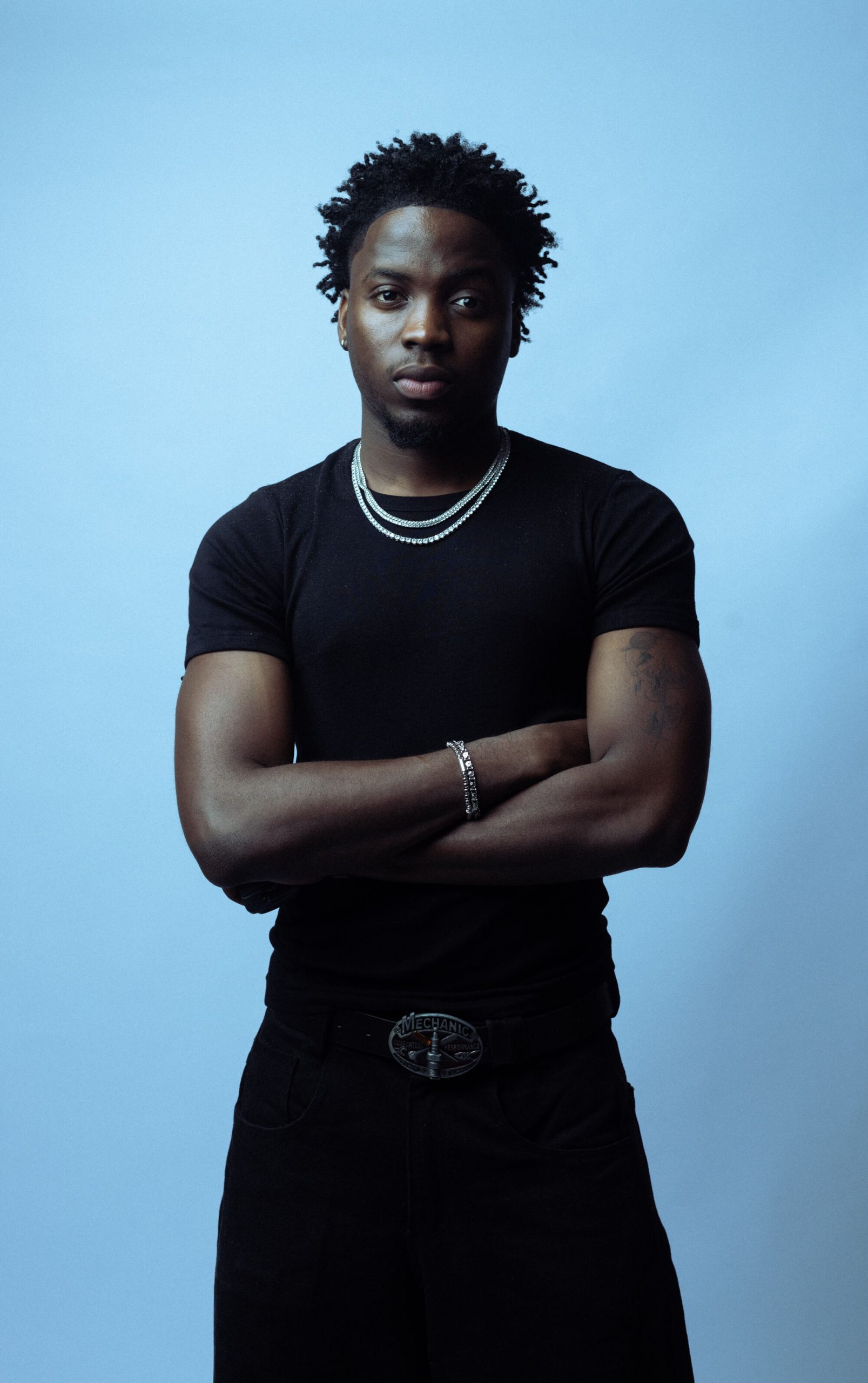
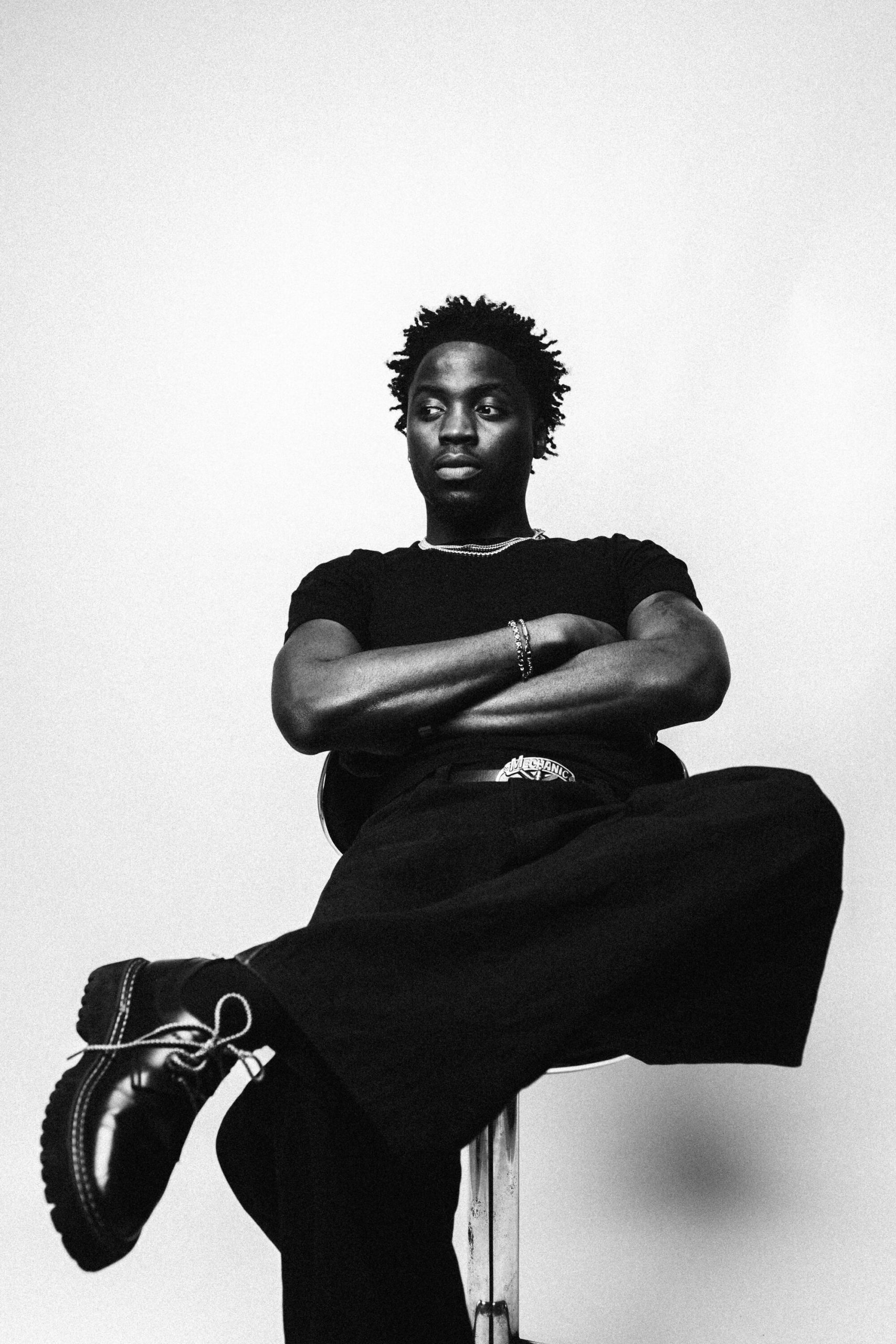
‘Abeg O’ sounds playful on the surface but underneath it deals with insecurity, unhealthy habits and self-sabotage. Why were you drawn to disguising some of your most uncomfortable truths inside something that feels lighter?
That’s a good question. I think it’s just the way God gifted me as a writer. People often miss the point of my songs because I don’t always write in the mood of what I’m saying. It takes careful listening to really understand the message.
With ‘Abeg O’, I intentionally didn’t want the song to sound like what it was actually saying. I wanted it to feel light so that, even after I came out of that headspace, I could still enjoy listening to it.
I actually started the production myself, and it came from an experience that was funny and a little weird. It was about a fling that was supposed to end that day, but it didn’t seem like it was going to. I remember I was having a conversation with a friend when the phrase “Abeg O” came to mind, and I just started humming it.
There’s a lot of truth in that song, especially in the second verse. I think it’s one of those records where people might miss what I’m really saying, but that’s okay. As long as they enjoy the music, I’m happy with that.
Faith becomes particularly exposed on ‘Calvary’ where you imagine a direct conversation with God. What are the questions you find yourself asking about purpose now that success has already answered some of the material ones?
My first real encounter with purpose was around 2021 or 2022, and from that moment, I felt like I had already found it. Because of that, I’ve never believed that material things define purpose. They might support it, but they don’t determine it.
I also didn’t write ‘Calvary’ because I felt like I lacked purpose. I wrote it because it’s a very daring song.
You grow up hearing that someone died for you, someone saved you, and someone loves you. So my question became: If all of that is true, why do I still feel the way I feel?
The song is almost like telling God, “Come outside, I want to talk to You.” Usually people pray for blessings or money, but I wasn’t looking for any of that. I just wanted to have an honest conversation.
It was a confrontational song in the sense that I was being vulnerable. I was asking why I still struggled with certain things and why I felt the way I did. I think every human being has moments where they question God, especially during their most difficult seasons. You see people lose loved ones or go through painful experiences, and naturally they ask, “Why?”
For me, ‘Calvary’ was simply using music as a way to have that conversation and express those feelings honestly.
The album moves between confessional songwriting and collaborations with Phyno, Lojay, Wizard Chan, Zlatan, Joeboy and G4ZI. How did you decide which parts of this very personal story needed another voice beside yours?
I’d say collaboration is very important because it immediately gives people something to look forward to before they even hear the song.
Every collaboration on the album felt right, but if I had to choose a favourite, it would be G4ZI. We go way back, we attended the same primary school, and we’ve always been there for each other through some really difficult moments, constantly reminding ourselves that things would eventually be okay.
That history makes the collaboration special to me.
Sometimes collaborations aren’t strategic; they just happen because they feel right. And when something feels natural, it’s much easier for people to connect with it.
Your music often makes vulnerability feel quiet rather than theatrical. When you’re writing about something genuinely painful, how do you know how much of yourself to reveal and what should remain private?
Honestly, I don’t think about it.
I never stop myself while writing because something feels too public or too vulnerable. If it comes out naturally and it makes sense in the song, I’ll write it.
Whether I choose to release it is a different conversation, but I never let that affect my creative process.
Sometimes I’ll write a song because I’m angry with my team or frustrated about something. Sometimes I’ll write about my family, or even about myself. Not every song has to be released, but it’s important that I always write exactly how I feel.
‘Calvary’ is a good example. If I didn’t believe that it reflected feelings a lot of people quietly have, I probably would never have shared it because I know the place it came from. It came from a very sad and vulnerable place.
There are a lot of songs people will never hear, but I don’t let those emotions stay in my head. If I don’t write them out, they’ll affect whatever I’m trying to create next. For me, it’s always better to let them out through music.
You’ve gone from writing for other artists and making music out of “silence, thought and feeling” to more than 300 million streams and a debut album this exposed. After making 22, what does freedom mean to you now that more people are watching?
I don’t think I’ve attained freedom.
I also don’t think writing for other artists means you’re less free, just as becoming the artist doesn’t automatically make you free. In some ways, I actually think being the artist comes with even less freedom.
To be honest, I don’t even know if freedom is what I’m working towards anymore. I think I’m working towards peace.
I’m simply trying to get to a place where I’m at peace with what I’m doing and at peace with myself.
I also think freedom means different things to different people. For me, if I have peace, then that’s enough.
Follow Kunmie on Instagram
Words: Linda Kadiri
Photographer: Dela