

From selling sweets in school to drawing crowds like block parties, POSER’s 19-year-old founder is rewriting the rules of UK streetwear — No funding. No blueprint. Just instinct, a phone camera, and a cult following that keeps growing. With the OG collection back in rotation, instead of looking back, Alfie’s already thinking about what comes next.
Since launching the label on the last day of his GCSEs, Alfie Edwards has blurred the line between fashion, fandom and pure cultural noise. What began as an experiment has grown into one of the UK’s most disruptive streetwear presences: shutting down Soho, summoning police helicopters, and cultivating a following that feels more like a movement than a market.
Now, as POSER re-releases its OG collection — the one that helped ignite their word-of-mouth — we caught up with Alfie to talk momentum, meaning, and making moments.


You launched POSER on the last day of your GCSEs; was there a moment before that when you knew this would be more than just a side hustle?
Honestly, not really. It was very slow at the start—I wasn’t thinking long term. I was just building the foundations. It didn’t feel like a brand yet, more like something I was experimenting with. I was learning, trying things, and seeing what stuck. There wasn’t some big “this is it” moment—just a constant build-up of momentum over time.
The name “POSER” feels deliberately provocative—especially in a city like London, where authenticity and subculture is in constant dialogue. What inspired that name originally, and has its meaning shifted for you over time?
I chose “POSER” because it was bold, almost confrontational. It felt like a name that would spark something in people, whether that was confusion, judgment, or curiosity. In London, being called a poser is usually an insult, but I liked flipping that. To me, it’s about owning your image, being seen, even if people don’t get it. Over time, it’s grown into this statement about identity, self-expression, and how the outsider becomes the one setting the tone.

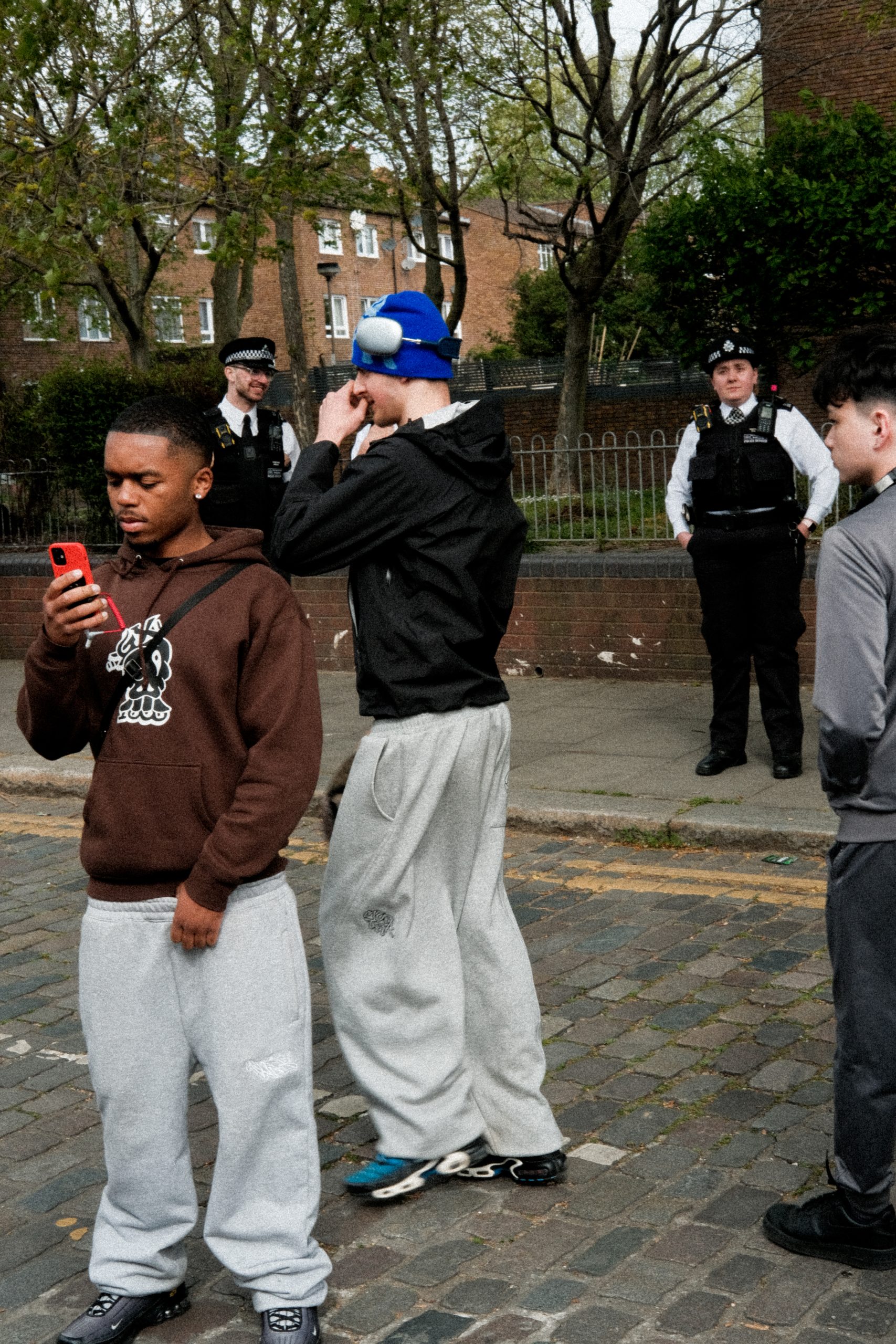
POSER’s drops feel more like events or cultural moments than product launches. Do you think that kind of hype-building comes naturally to you, or is it something you’ve had to learn?
It’s a bit of both. I’ve always had an instinct for creative direction and timing, and I know how to create anticipation. But I’ve had to learn how to scale that—how to make people care beyond the clothes. A lot of it comes from just being plugged into the culture and understanding what people respond to. I want every drop to feel like a moment, not just a transaction.
People travelled across the country for your 420 Lotto pop-up — what’s it like knowing your ideas bring real people together like that?
It’s surreal. I always expect chaos when we do stuff like that, but to see people travel hours just to be part of something I made up in my head—it’s mad. That pop-up was controversial, yeah, but it showed me how strong the community is. It’s more than just clothes—it’s energy. It’s people wanting to be part of something that feels real.
You’ve grown without ads, influencers, or traditional retail: do you think that’s what makes people trust POSER more than other brands? And why have you taken this approach?
Yeah, I think people trust POSER because it feels raw. There’s no middleman trying to sell you a lifestyle. I’ve never used paid ads—I want the pieces and the storytelling to do the talking. It’s slower, but the connection is real. The trust comes from consistency and from not trying to please everyone.

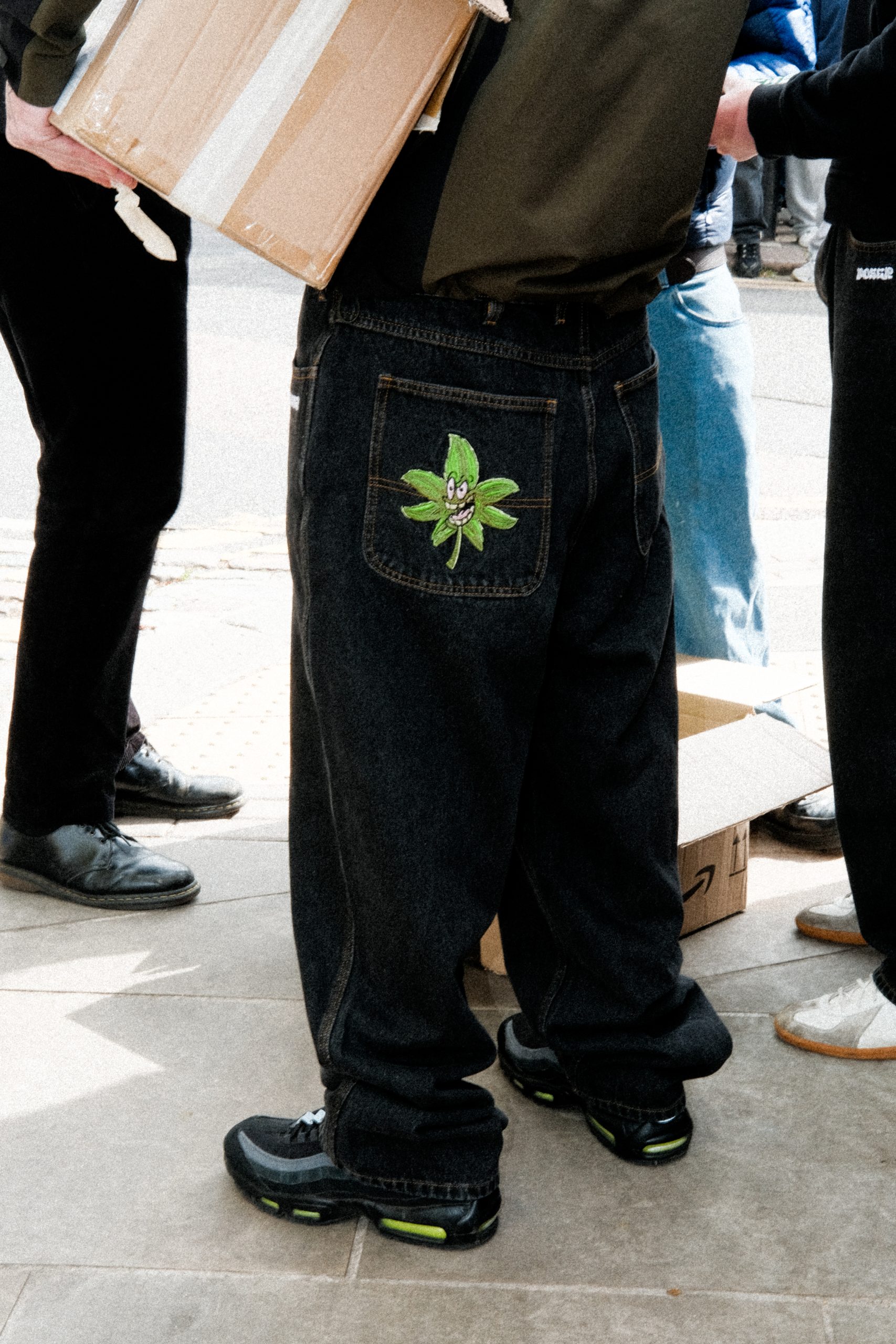
Your brand clearly taps into UK street culture, but who or what are some unexpected inspirations behind your visuals, storytelling, or designs?
A lot of it comes from random stuff people wouldn’t expect—old signs on estates, weird 90s ads, screenshots I take on my phone at 2 am, even stuff like public transport graphics or old school flyers. I get inspired by things that aren’t meant to be aesthetic but still say something. It might be a texture, a phrase, or just a tone. I’m drawn to stuff that feels a bit off or overlooked, then I flip it into something new.
What’s something you think people still don’t get about POSER, and what would you want them to understand?
I think people still see it as just a streetwear brand, but to me, it’s a creative outlet. It’s personal. Every drop, every campaign, even the mistakes—it’s all part of a bigger story I’m telling. I’d want people to understand that POSER isn’t trying to follow trends or tick boxes. It’s honest. And sometimes honesty doesn’t look polished, but that’s what makes it stick.
Follow POSER on Instagram
Words: Ashley Morris